Curious Nature
3,300 Square Foot Rooftop Terrace Gallery
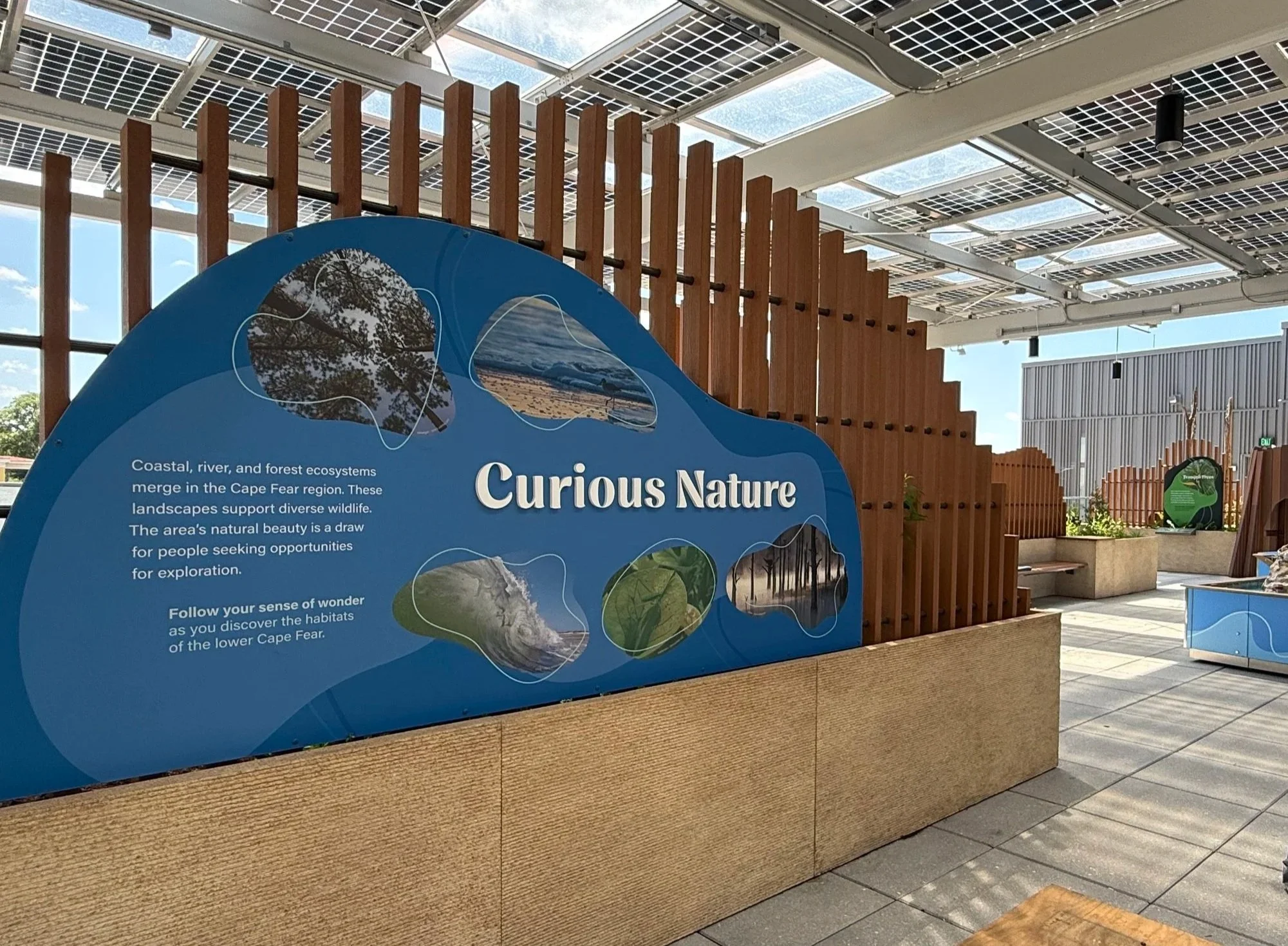
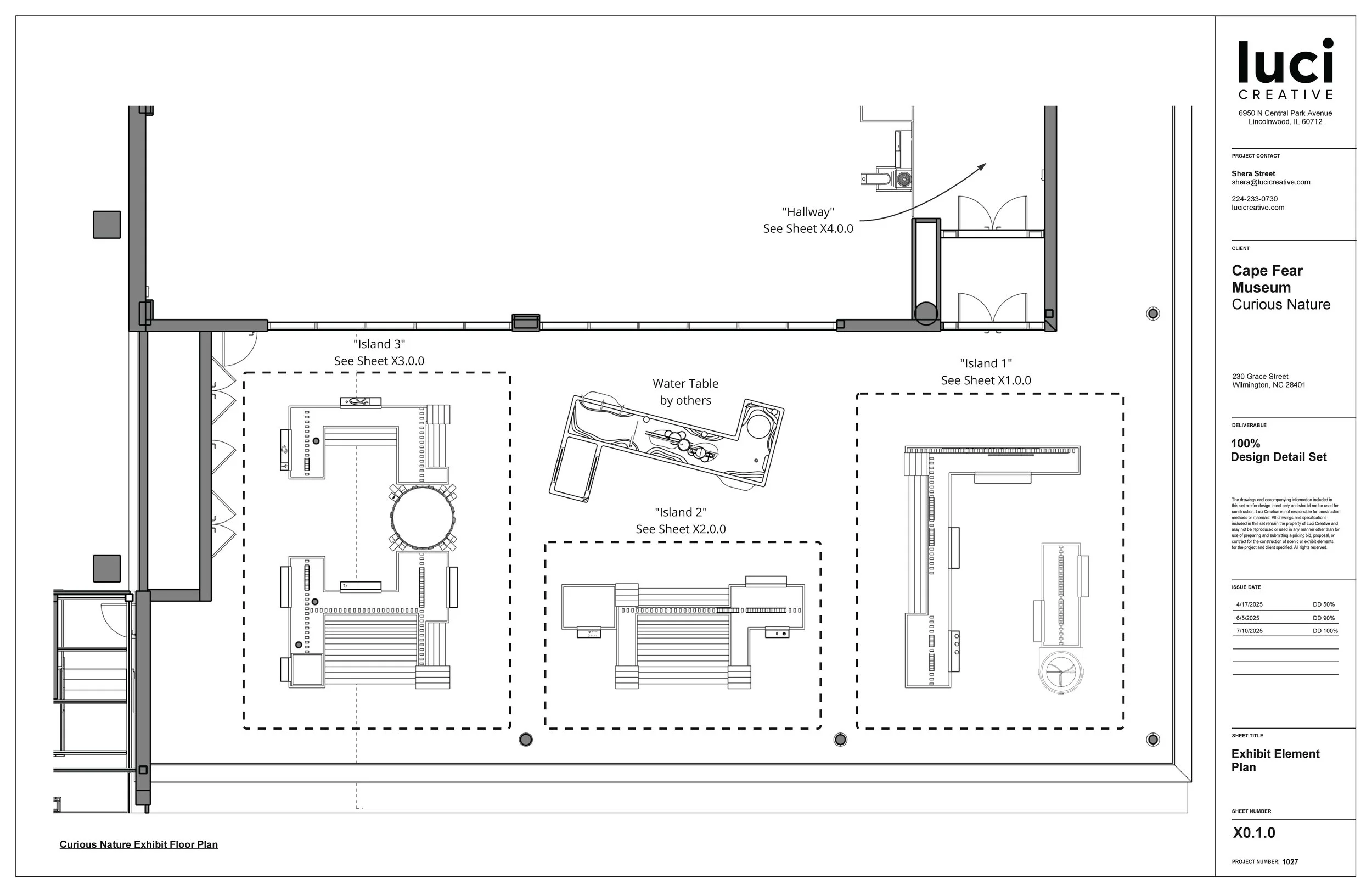
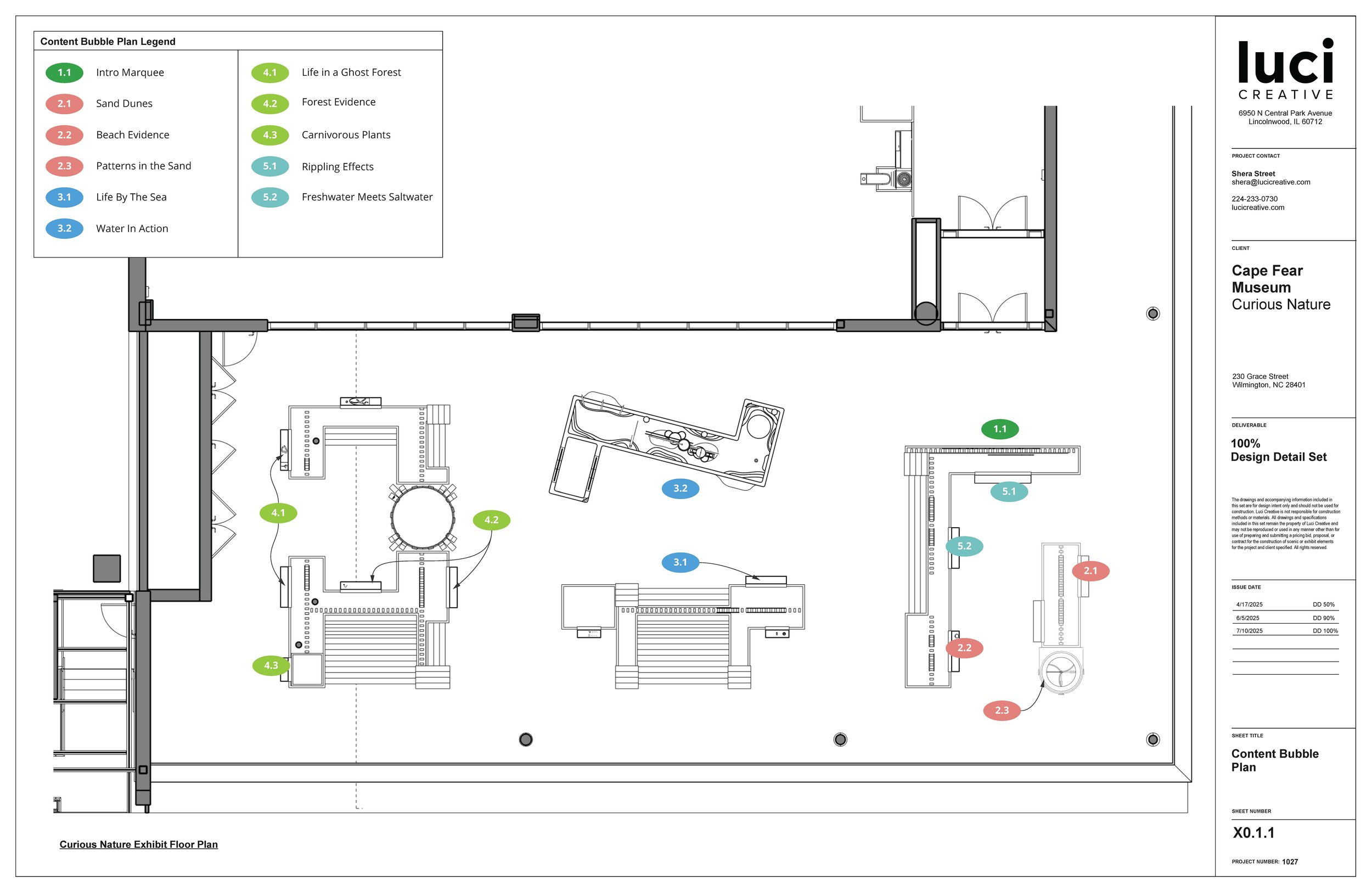
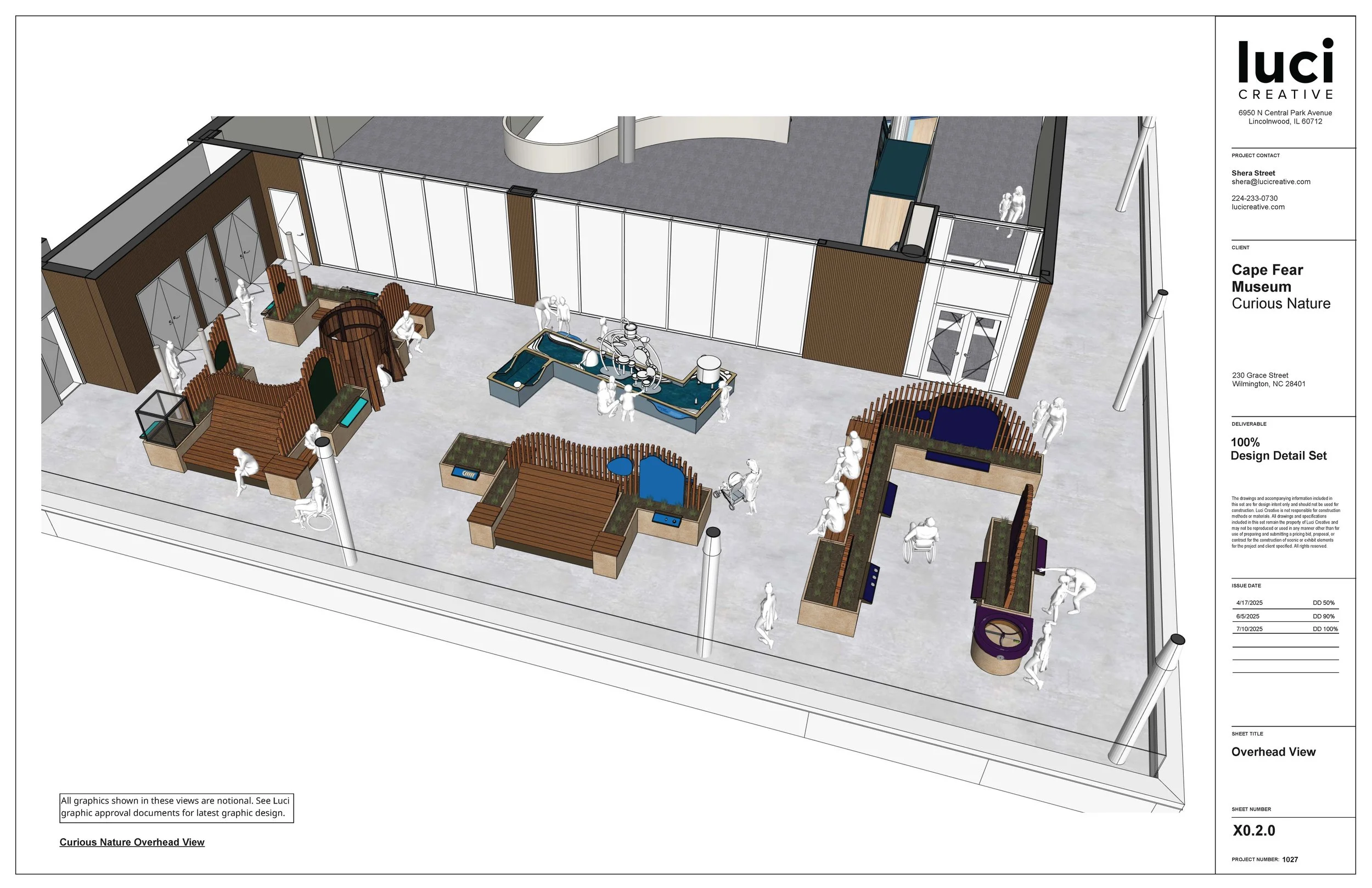
Through the doors adjacent to the Science Matters gallery, visitors can enter an outdoor rooftop terrace. This terrace is home to the Curious Nature gallery: a space where people of all ages can play, learn, relax, and engage with local flora and fauna of the region.
Large planter units house vegetation from the area, with unique interpretive graphics and hands-on tactile representations of shells, bugs, and the like. Kids can splash around in a water table and crawl through a giant tree stump while their caregivers relax with a book on custom lounge seating or observe a real Venus flytrap. And everyone can enjoy the outdoors and the beautiful views of downtown Wilmington.
Brainstorming and Sketching
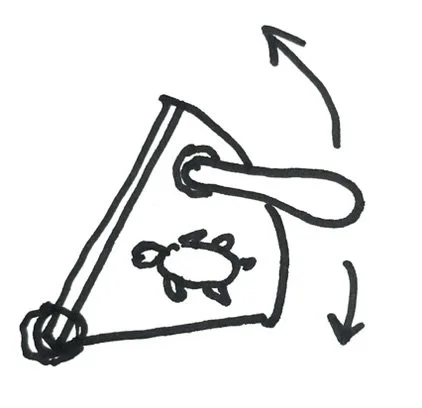
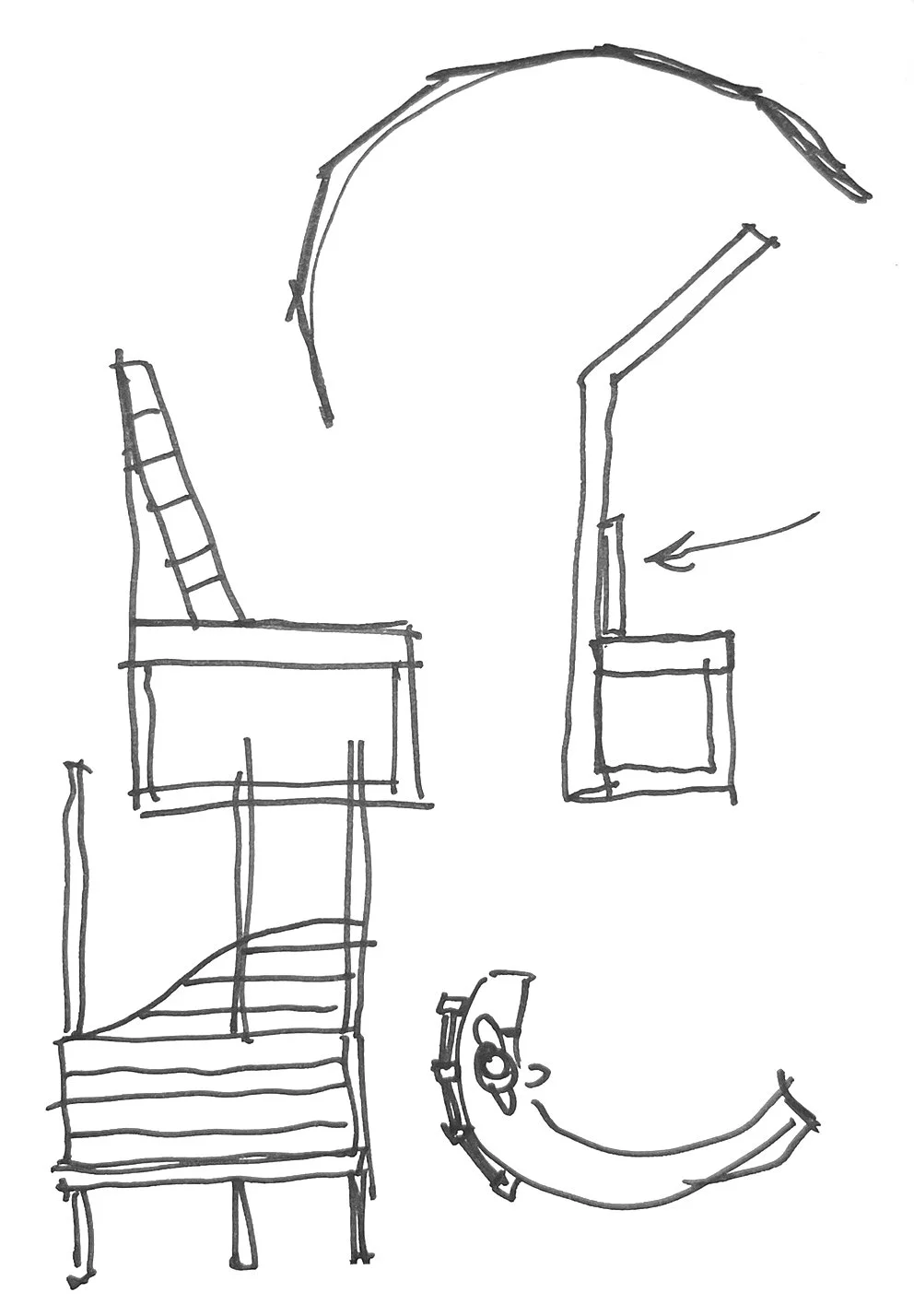
I began by thinking about other exhibits, games, and toys that achieve similar effects. Tip tables, indented rollers, Zen gardens, and even foosball and arcade hockey machines. As I broke down the coolest parts of all of these pre-existing elements, I started sketching ways to combine them into one unit.
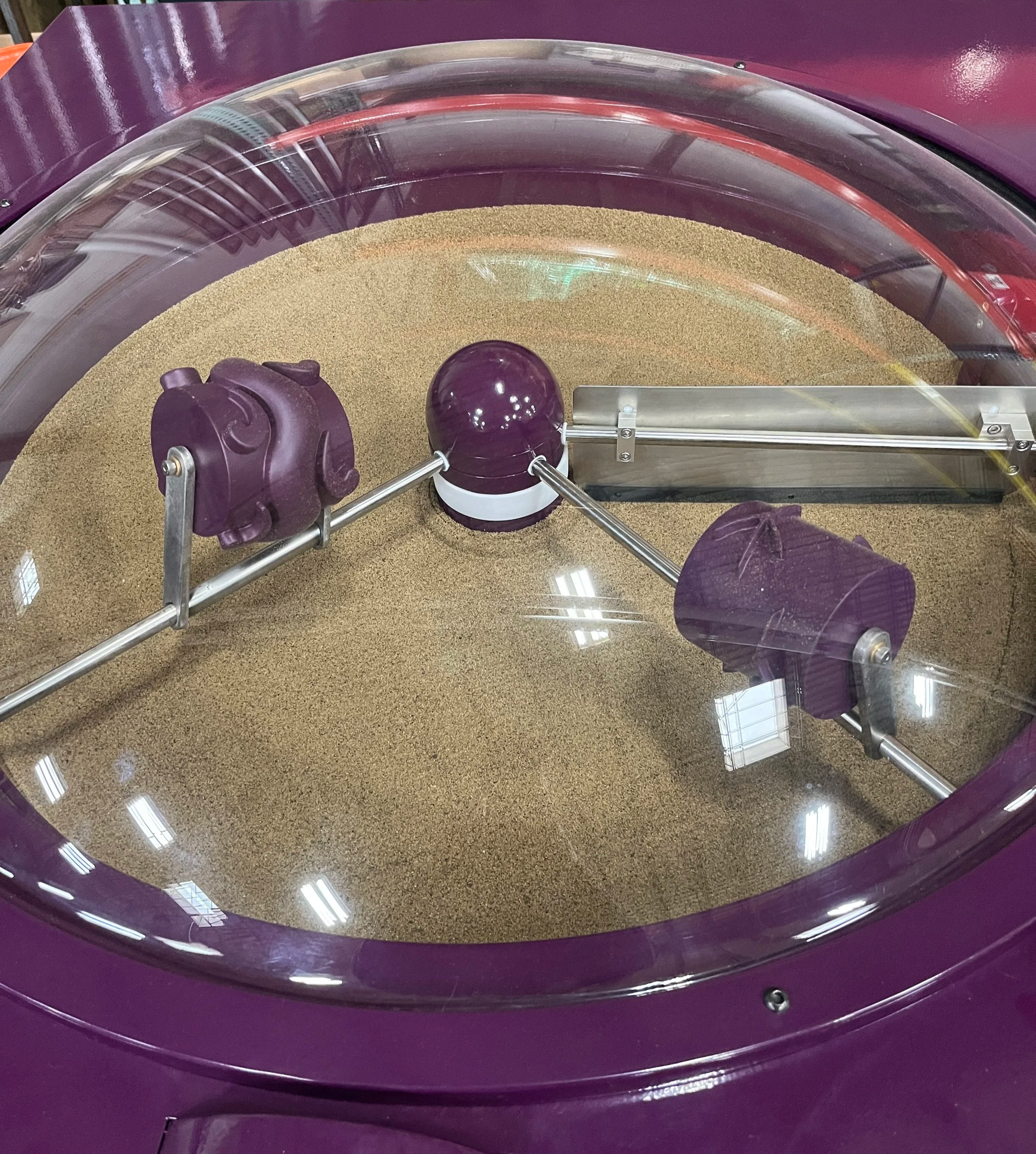
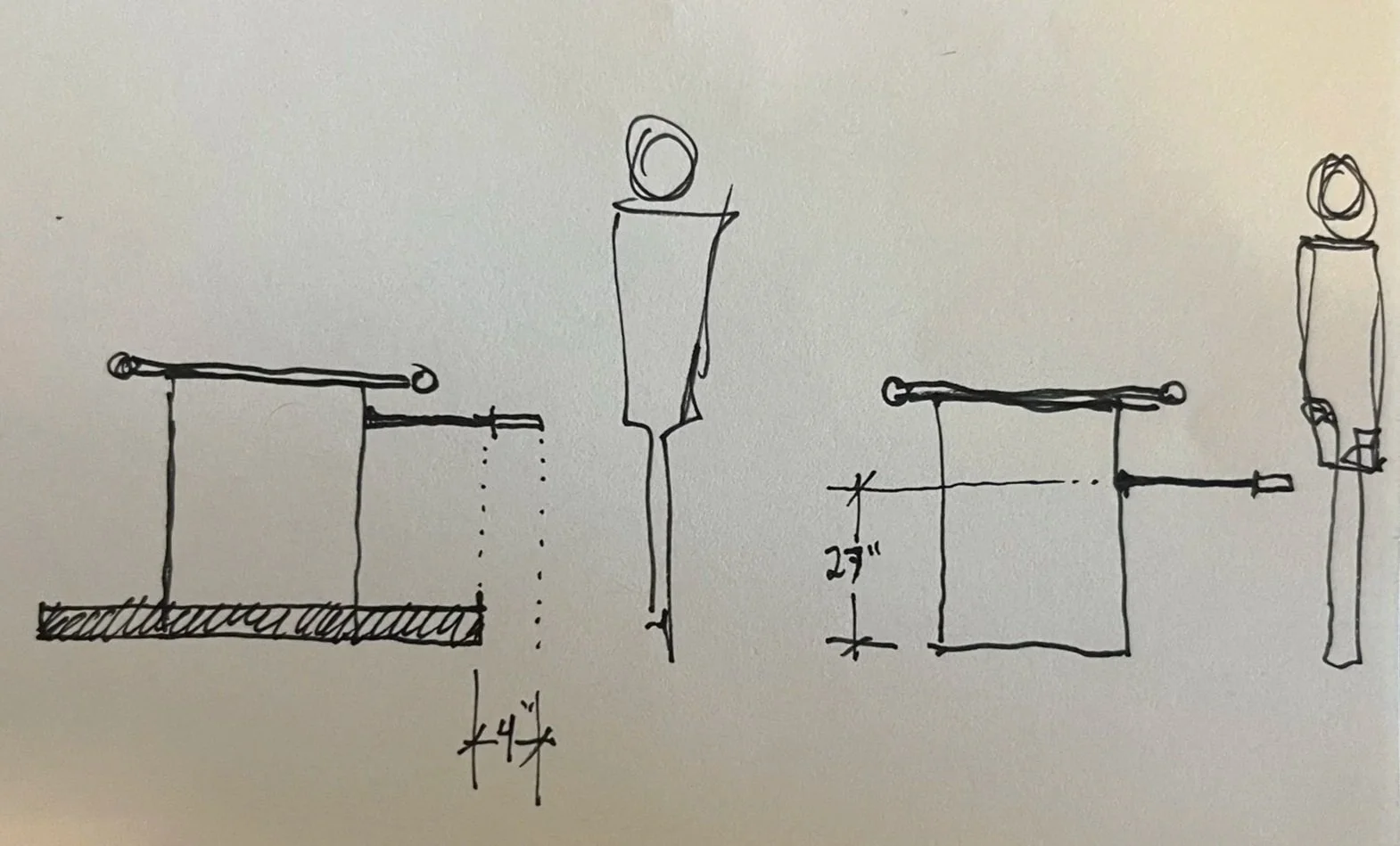
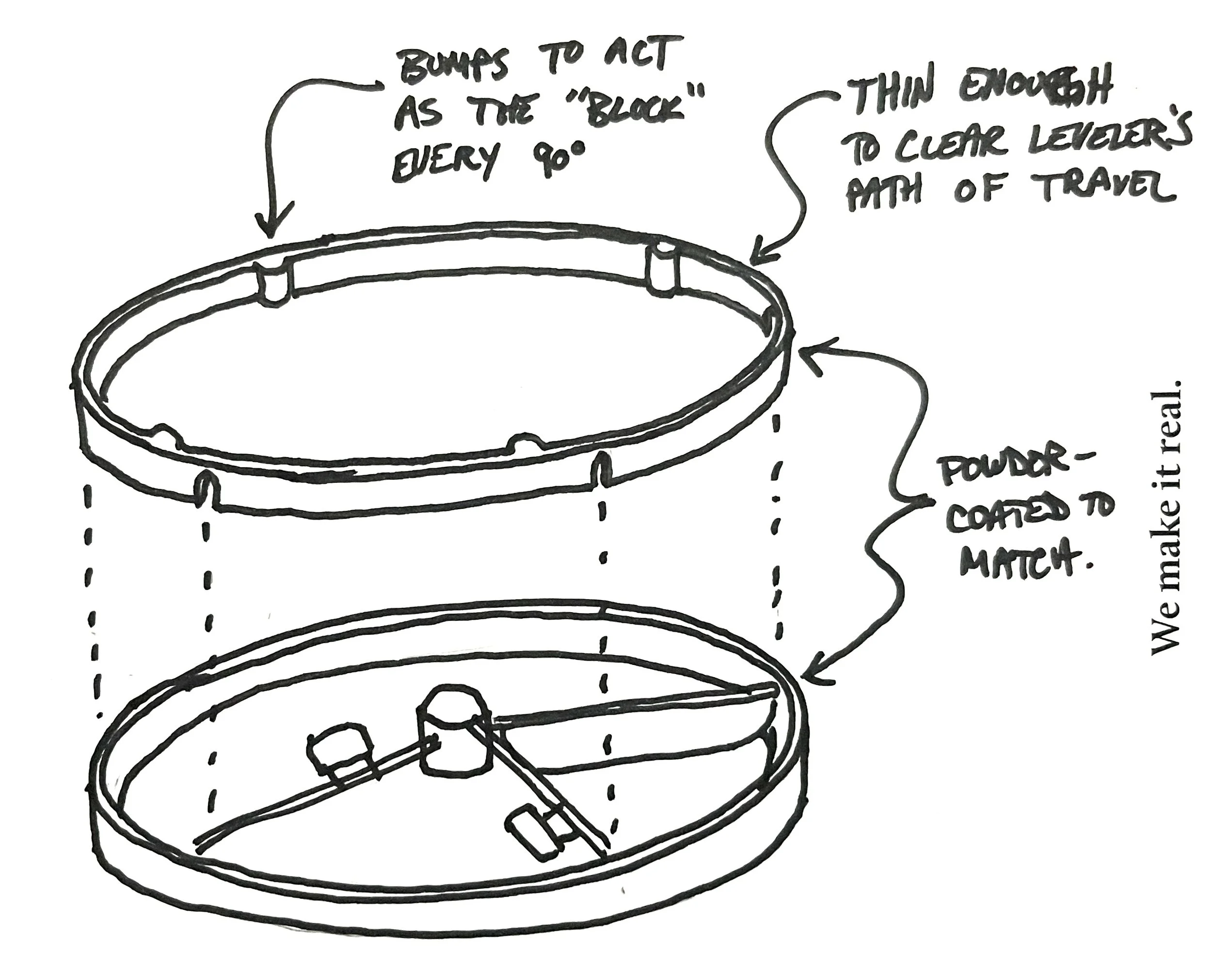
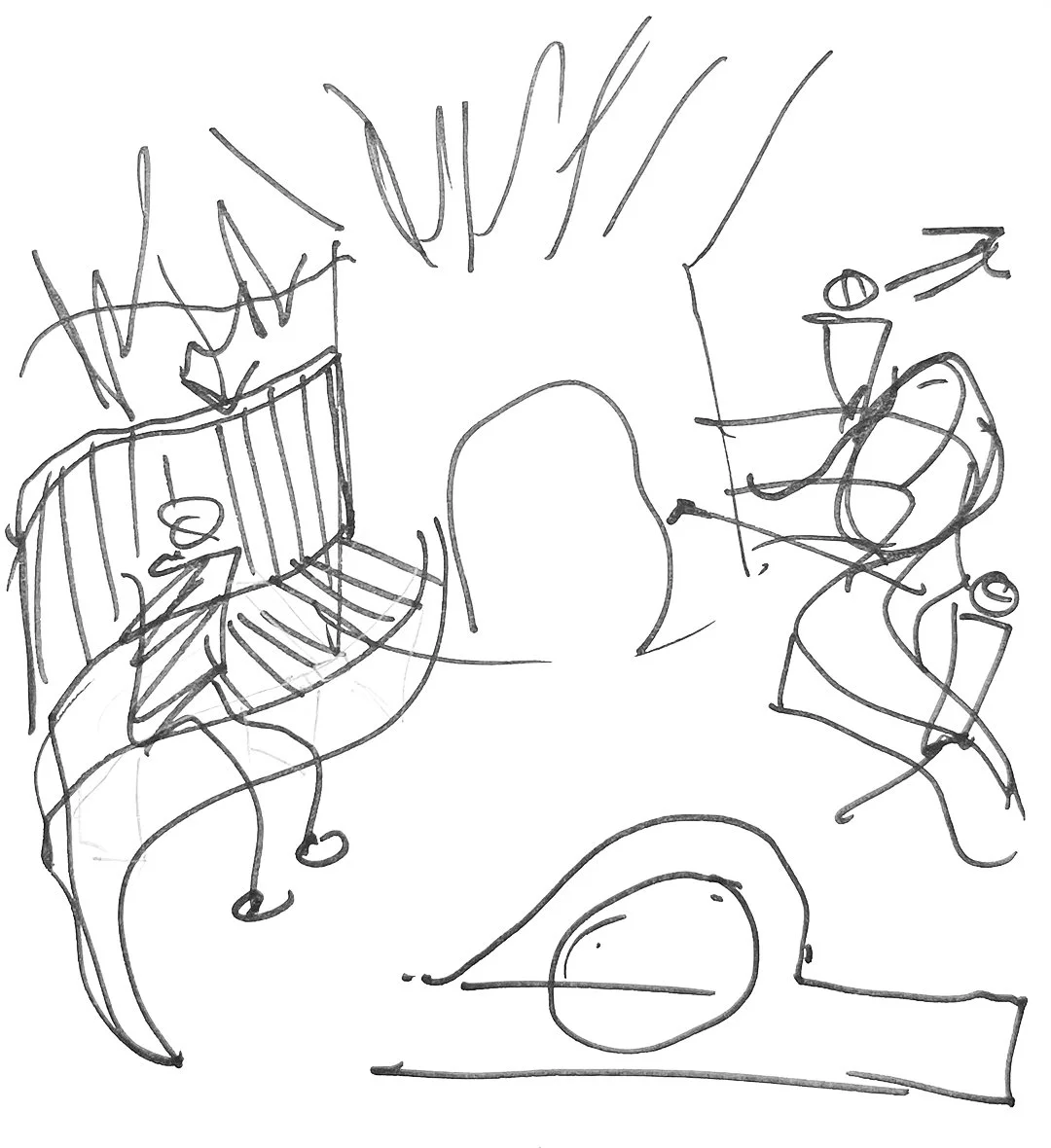
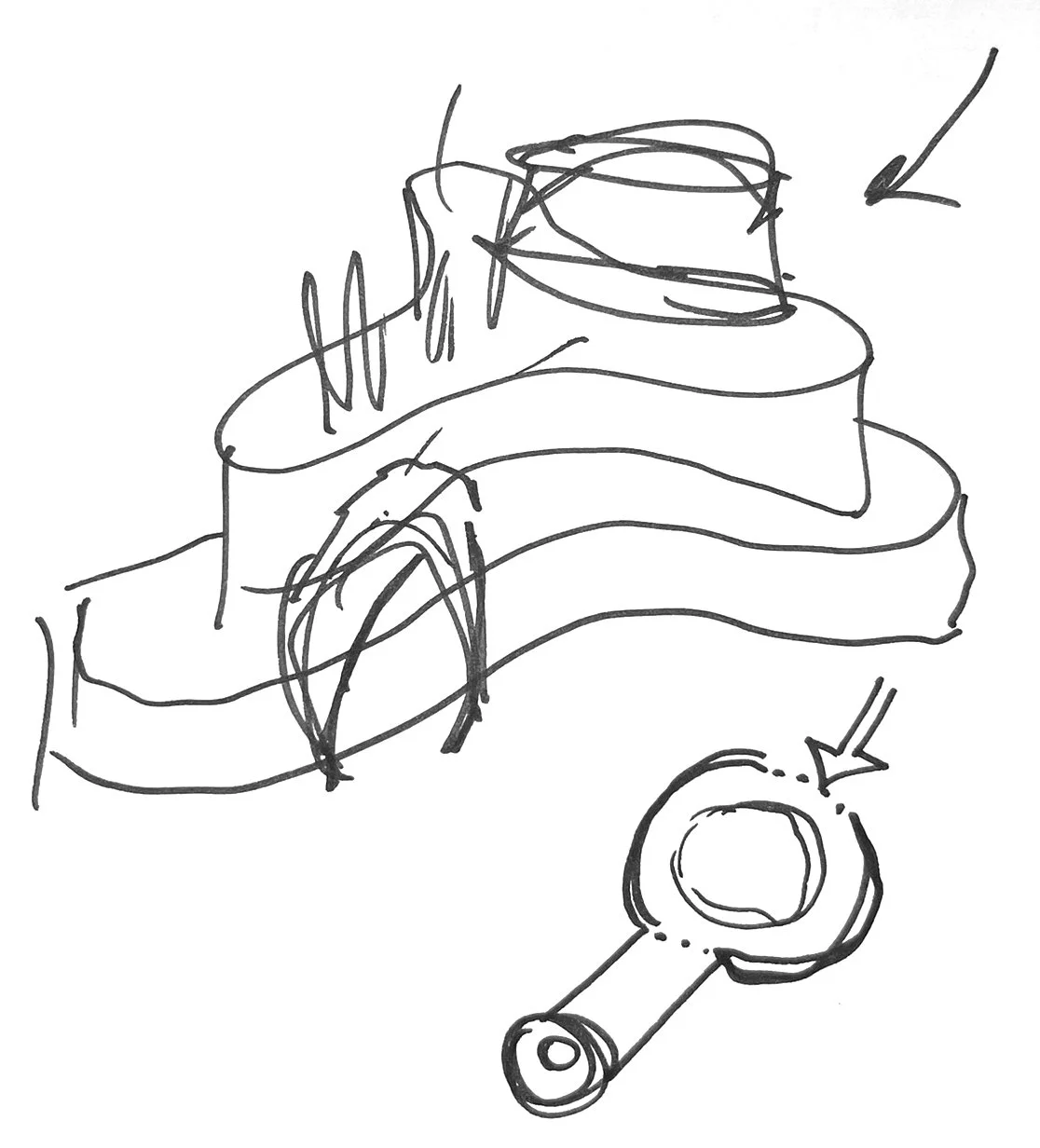
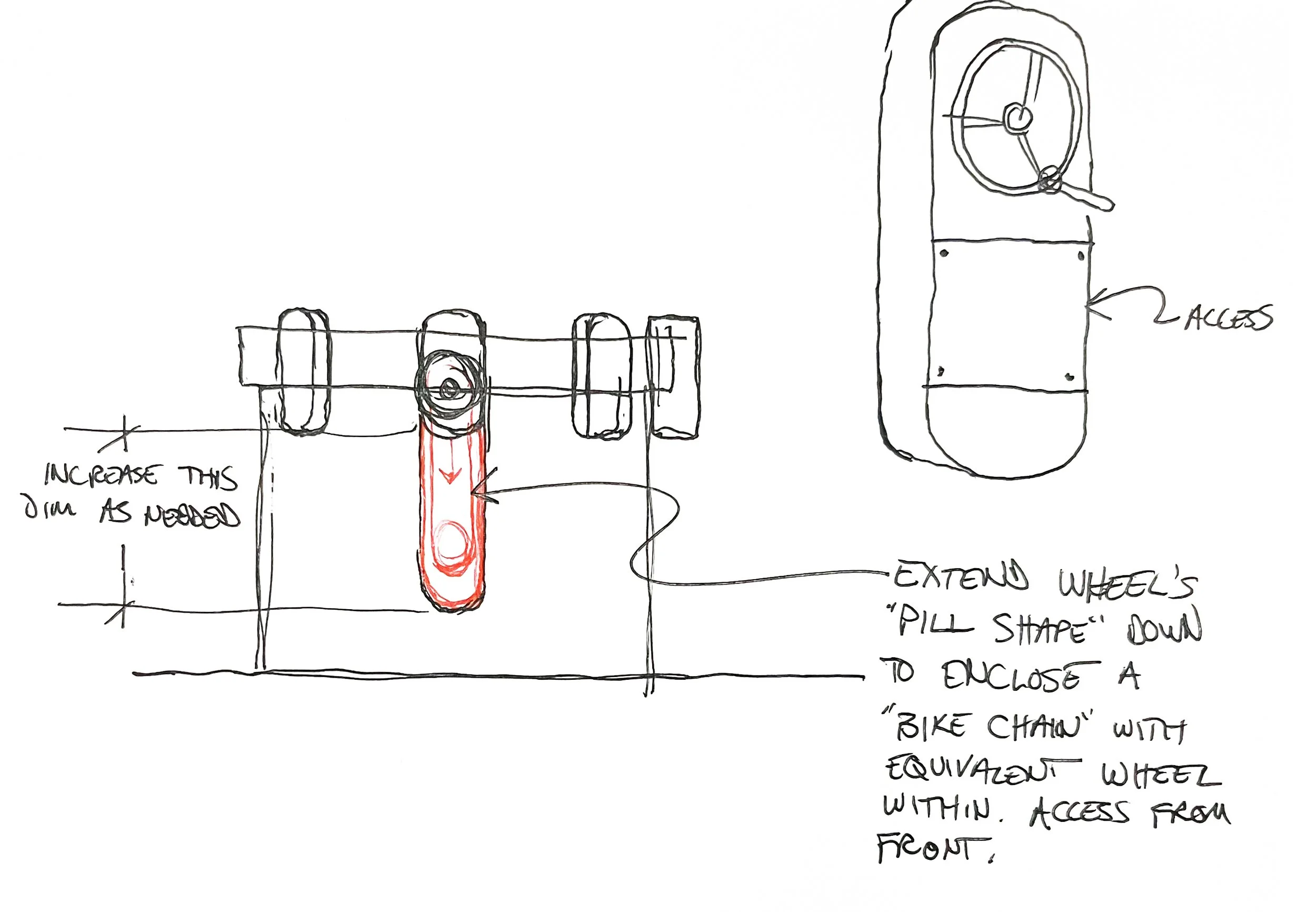
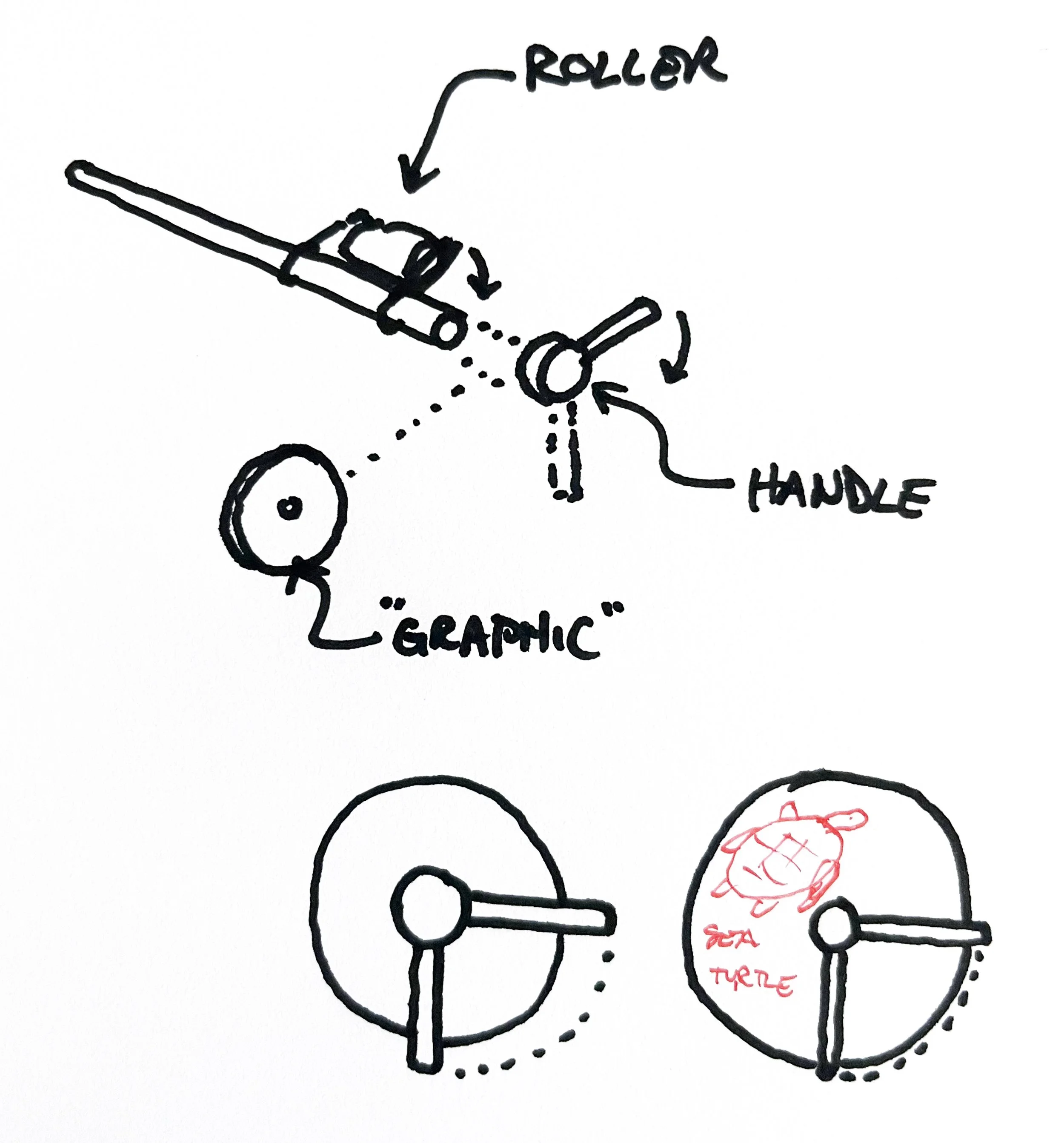
What if there were a record player, but instead of spinning a record, the turntable was a pan of sand? And instead of the needle arm, the visitor controls foosball arms with spinning drums that make bird footprints into the sand? The concept began to come forth, and the next step was to sketch the ideas to get client approval.
Include miro image(s) and edit the images here too.
Patterns in the Sand
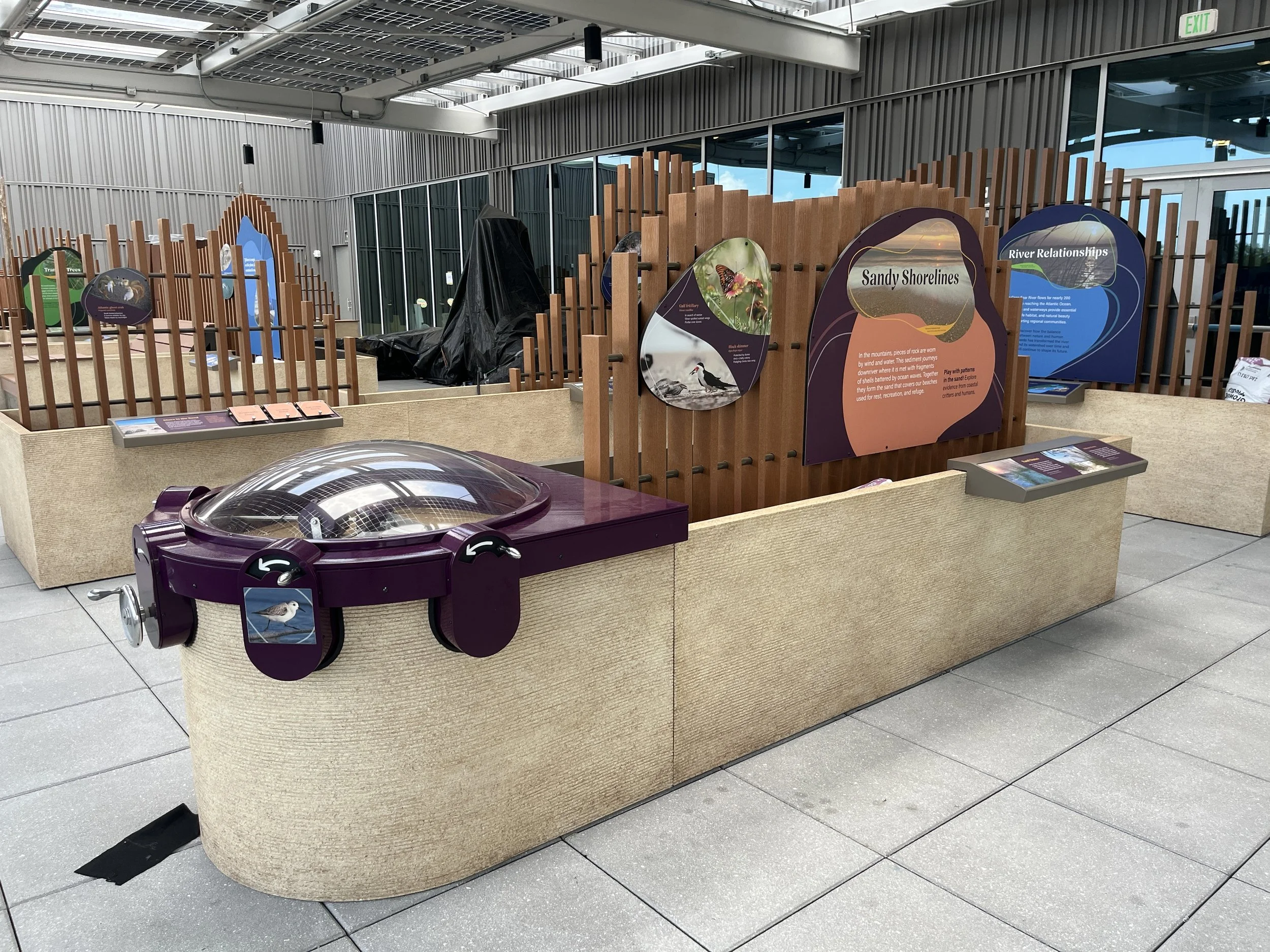
The brief for this rooftop terrace called for many different types of engaging experiences. It was to combine elements of a play space, a botanic garden, and a calm area to relax. The museum wanted a keystone interactive experience where visitors could be creative while learning about how local animals make tracks in the sand at the nearby beaches. It was to be something akin to a zen garden, but because this gallery is on a rooftop, an open container of sand would have been trouble.
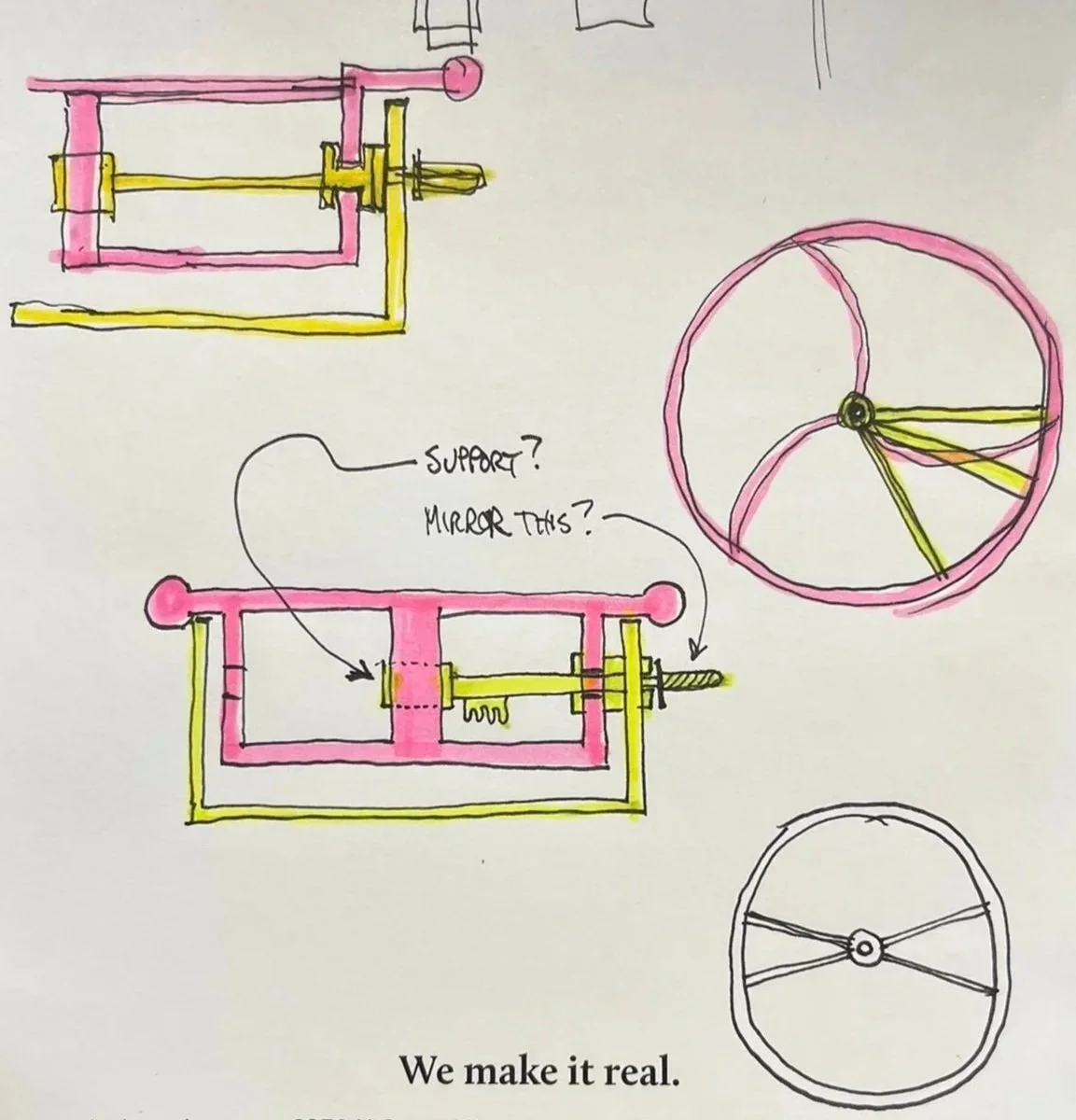
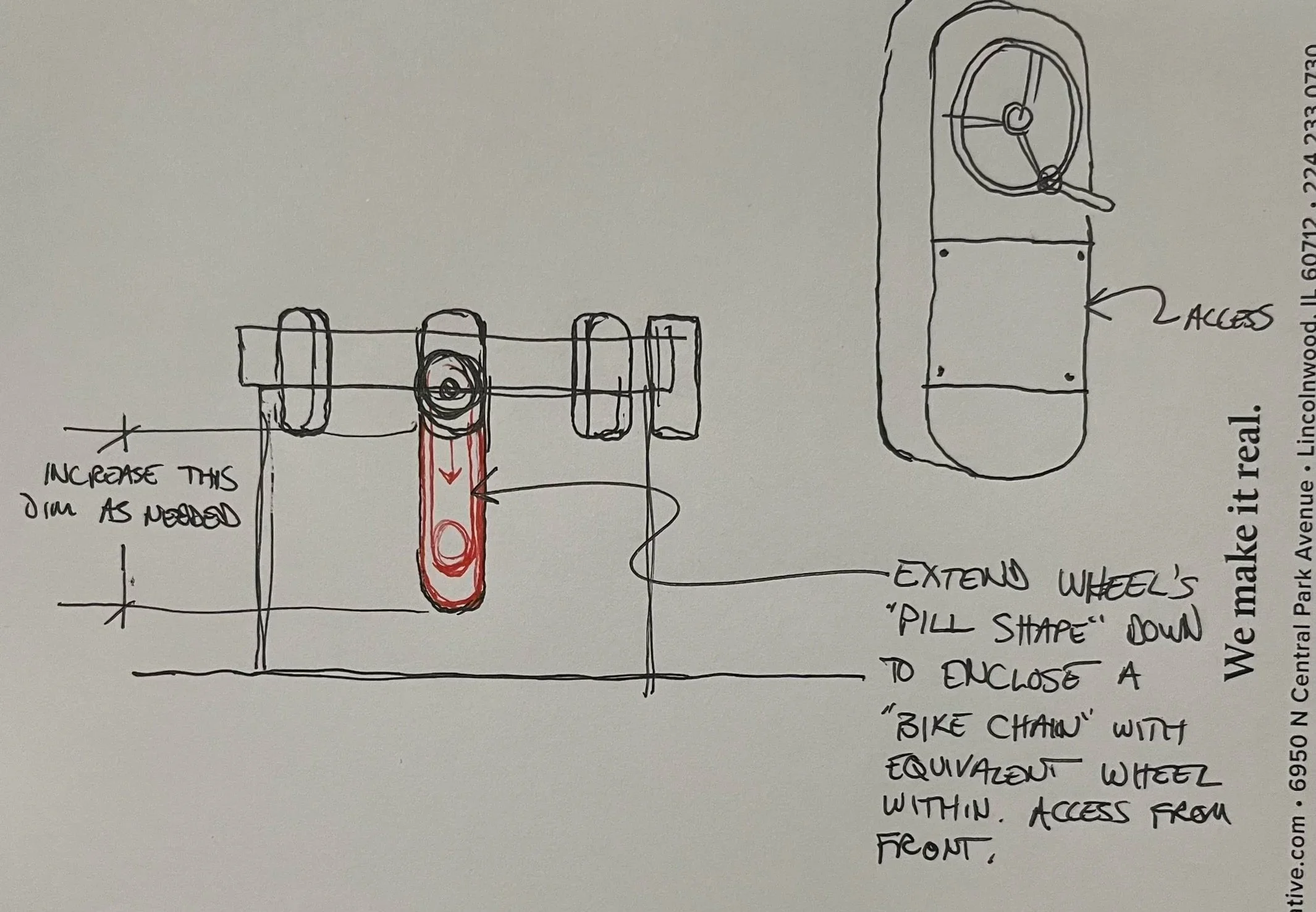
My challenge was to create a mark-making sand interactive that was fully enclosed, and still allowed visitors to have agency to express creativity. Follow the images below to see the process of bringing this to life.
The Final Product
Now, the Patterns in the Sand interactive sits on the roof terrace among beautiful exhibit structures that combine local plants, relaxing seating, and other interactive graphic displays.
Mockups and Prototypes
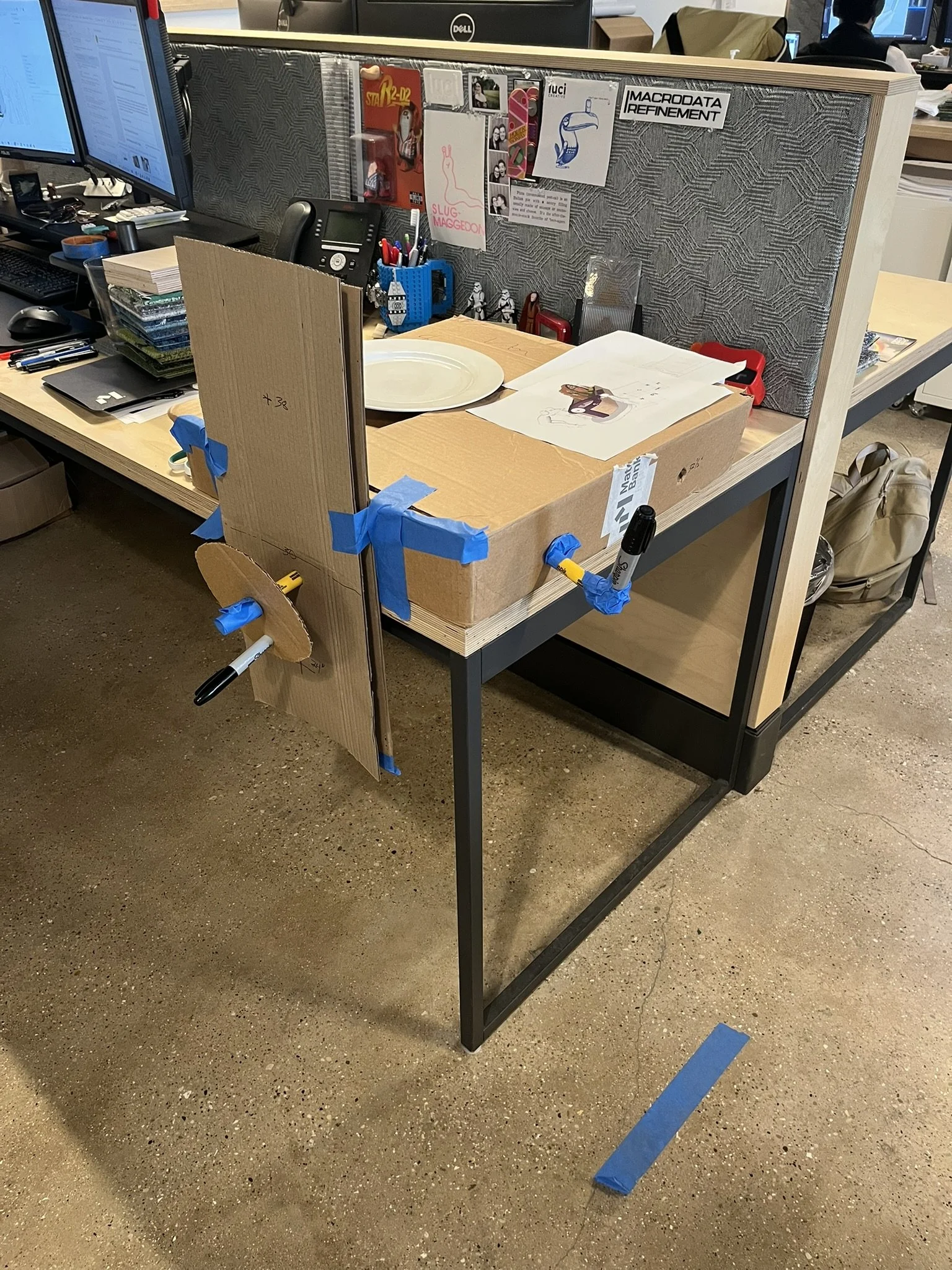
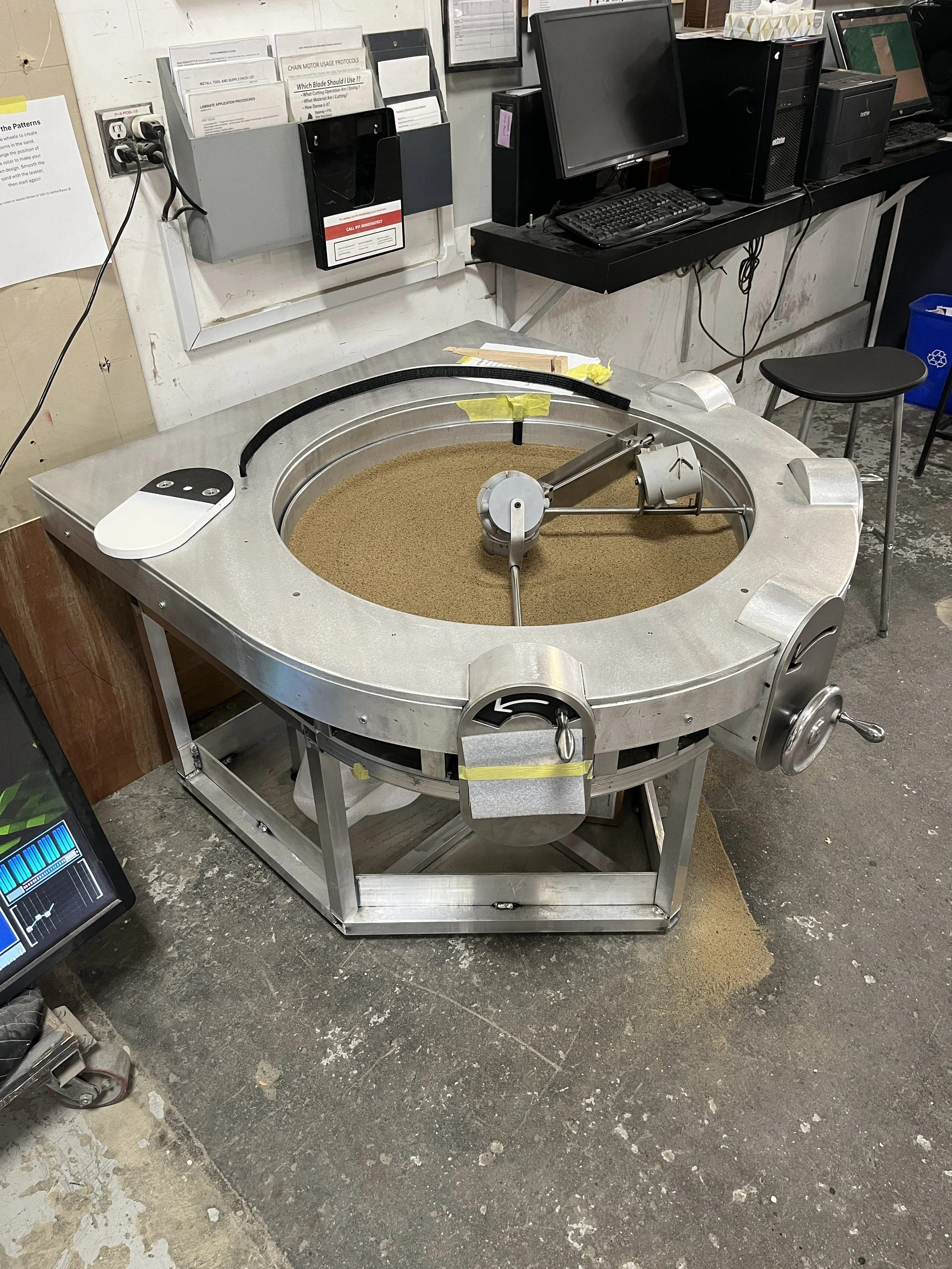
Once I knew our sand spinner concept had legs, I began the process of mockups and prototypes. My first step was to figure out the ergonomics and user interface. Is it easier to push and pull or rotate a crank handle? The first picture here shows a shaggy “rapid prototype” I built out of cardboard boxes, markers, and a dinner plate.
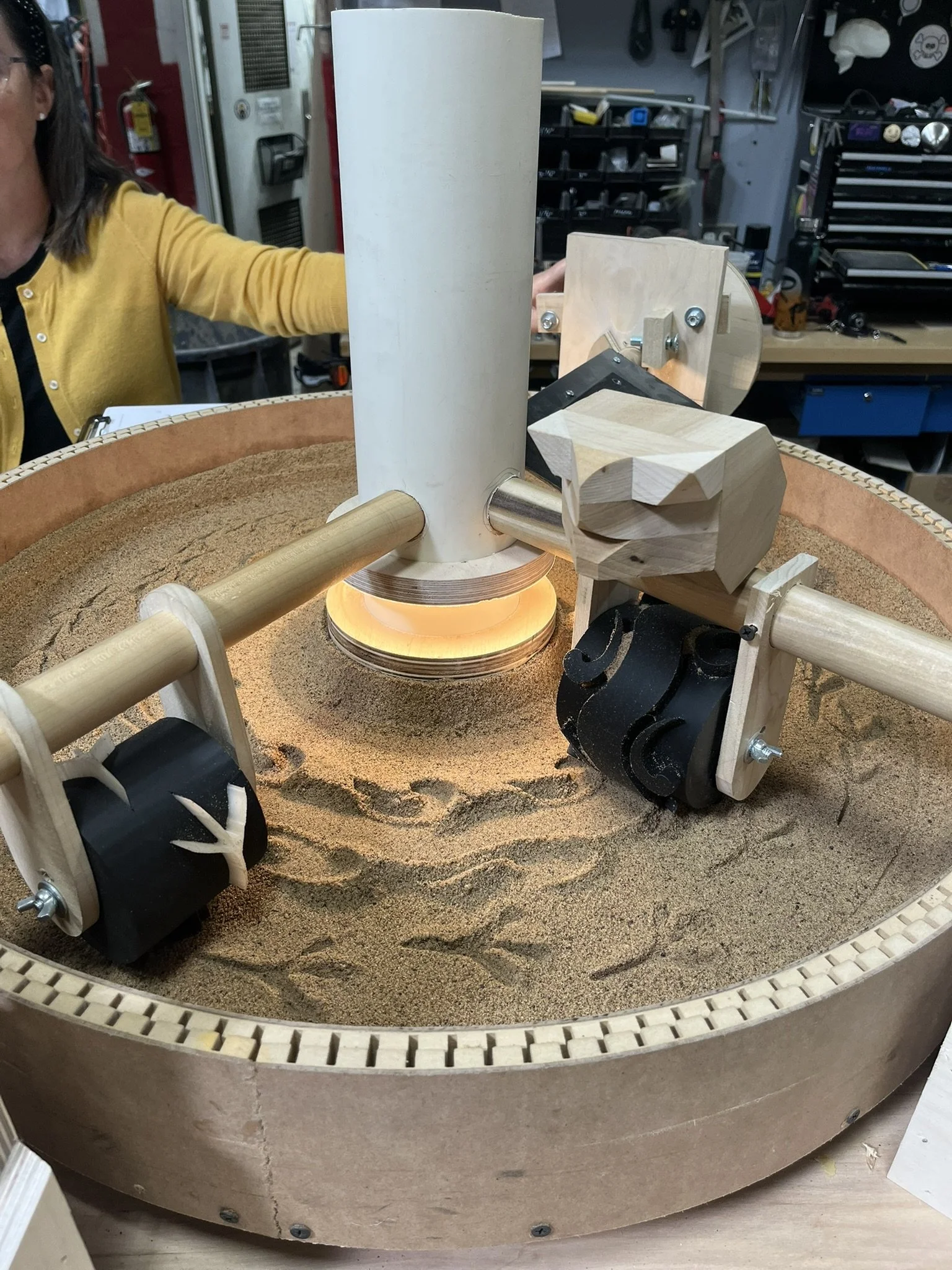
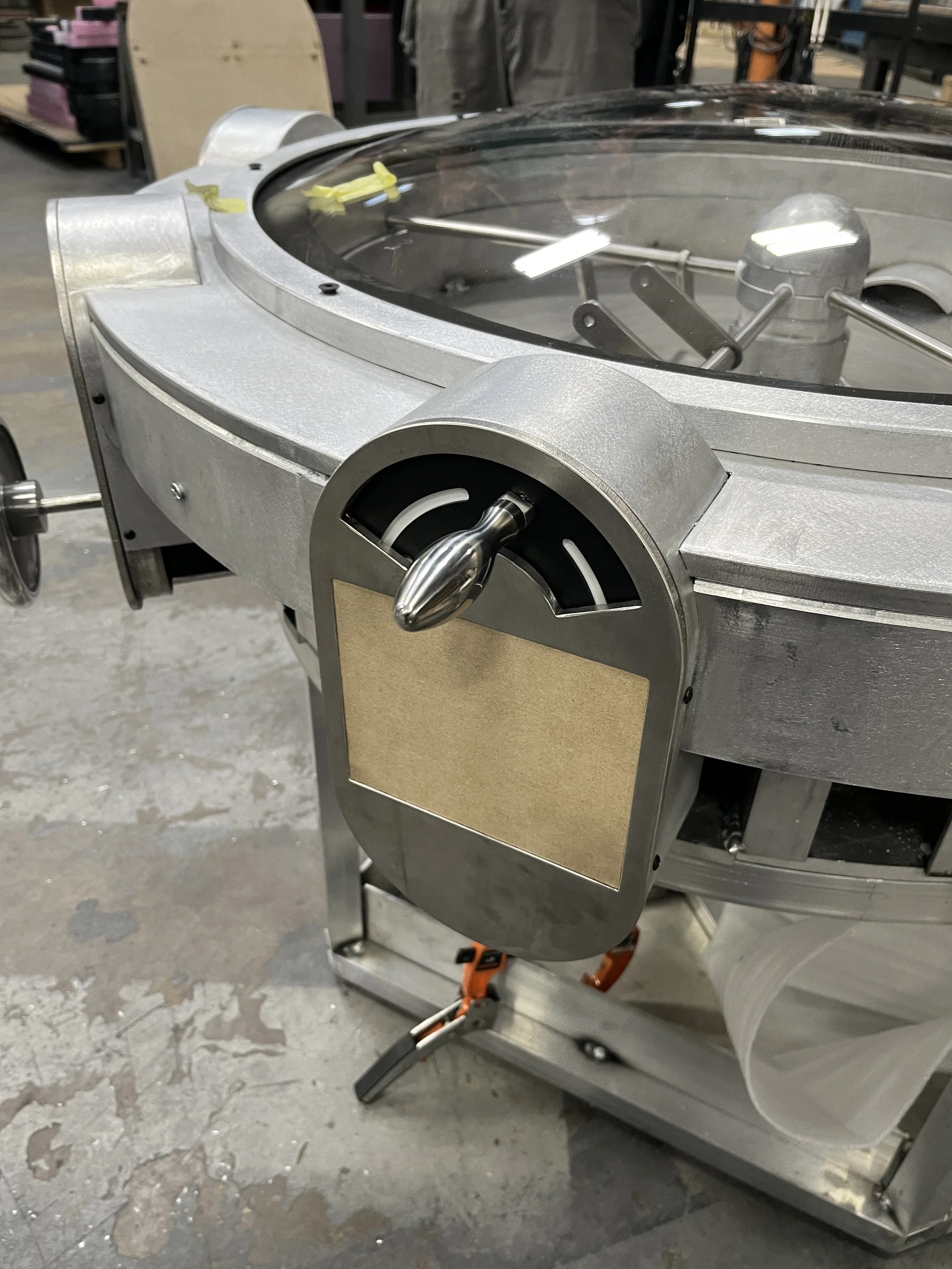
From there, our fabrication partners began a series of prototyping efforts at varying levels of fidelity with regular check-ins with me at regular intervals. It was a special challenge to dial in the ideal mixture of ingredients to make permanently “damp” sand. What started as wooden dowels and PVC pipe transitioned to 3D-printed drums, and ultimately custom-cut metal armatures and enclosures.
Seeing this piece go from precedent images to messy sketches to prototypes was one of my most favorite processes on the entire Cape Fear Museum project.
Gallery Photos
Sketches
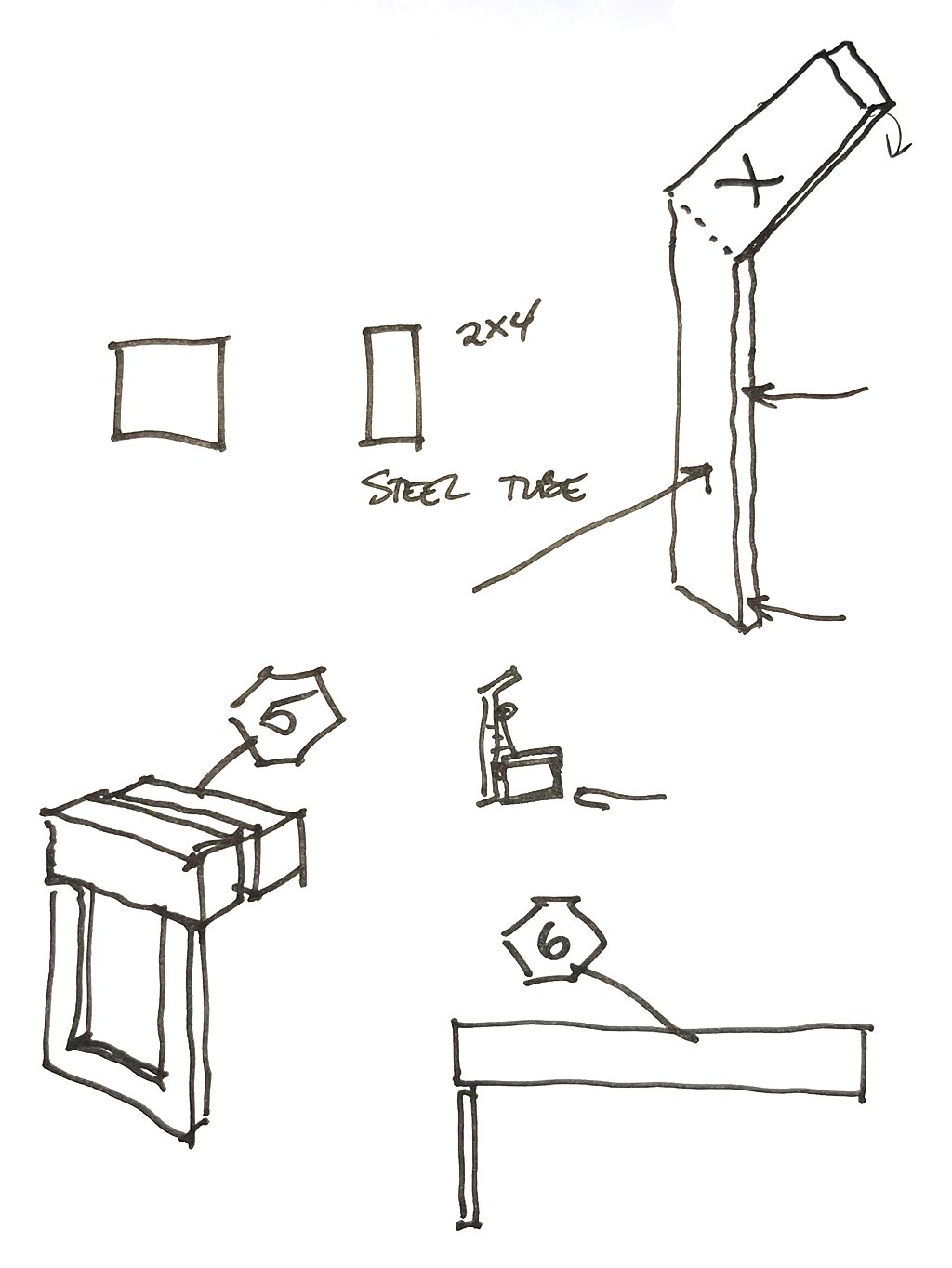
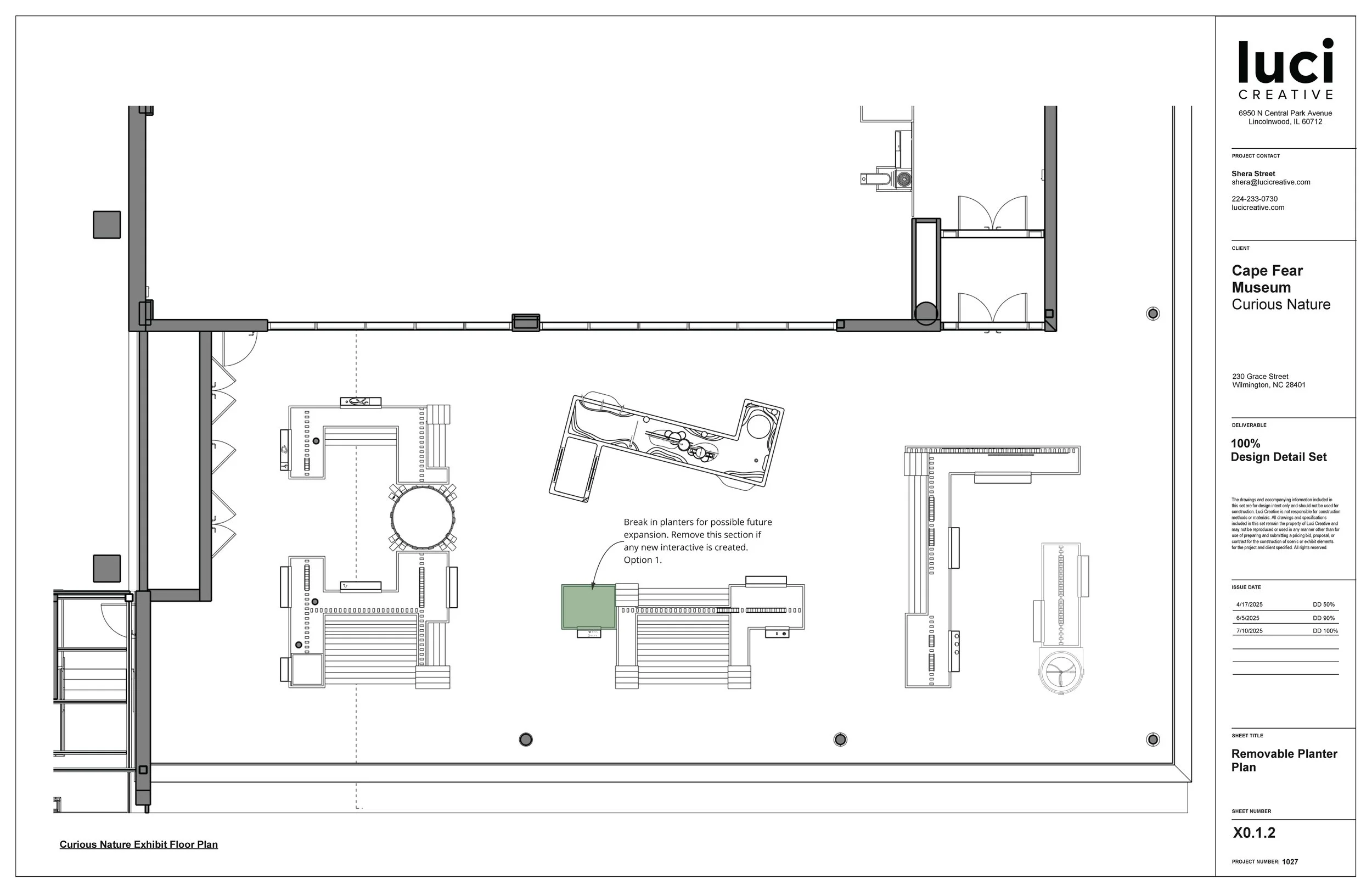
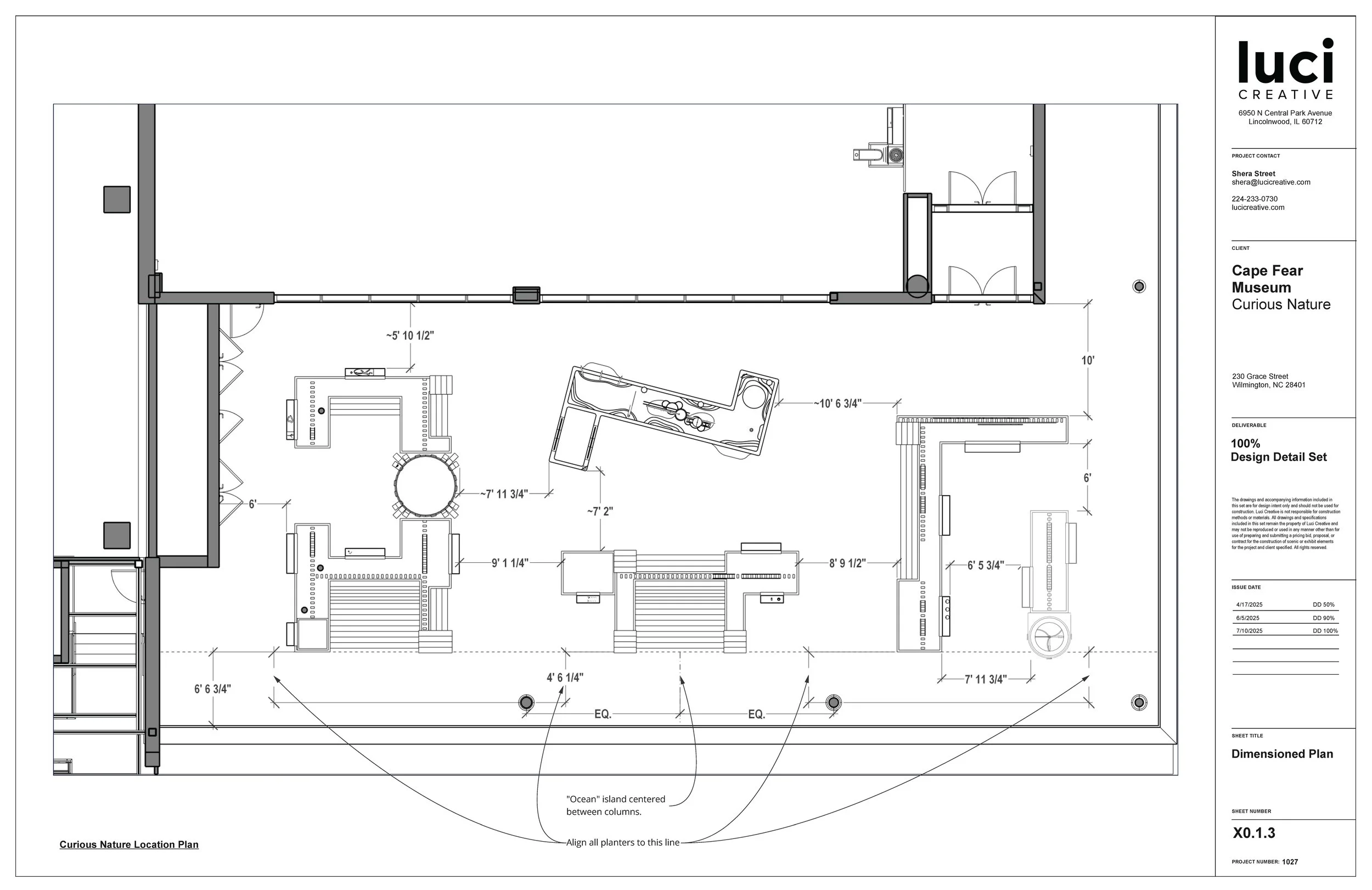
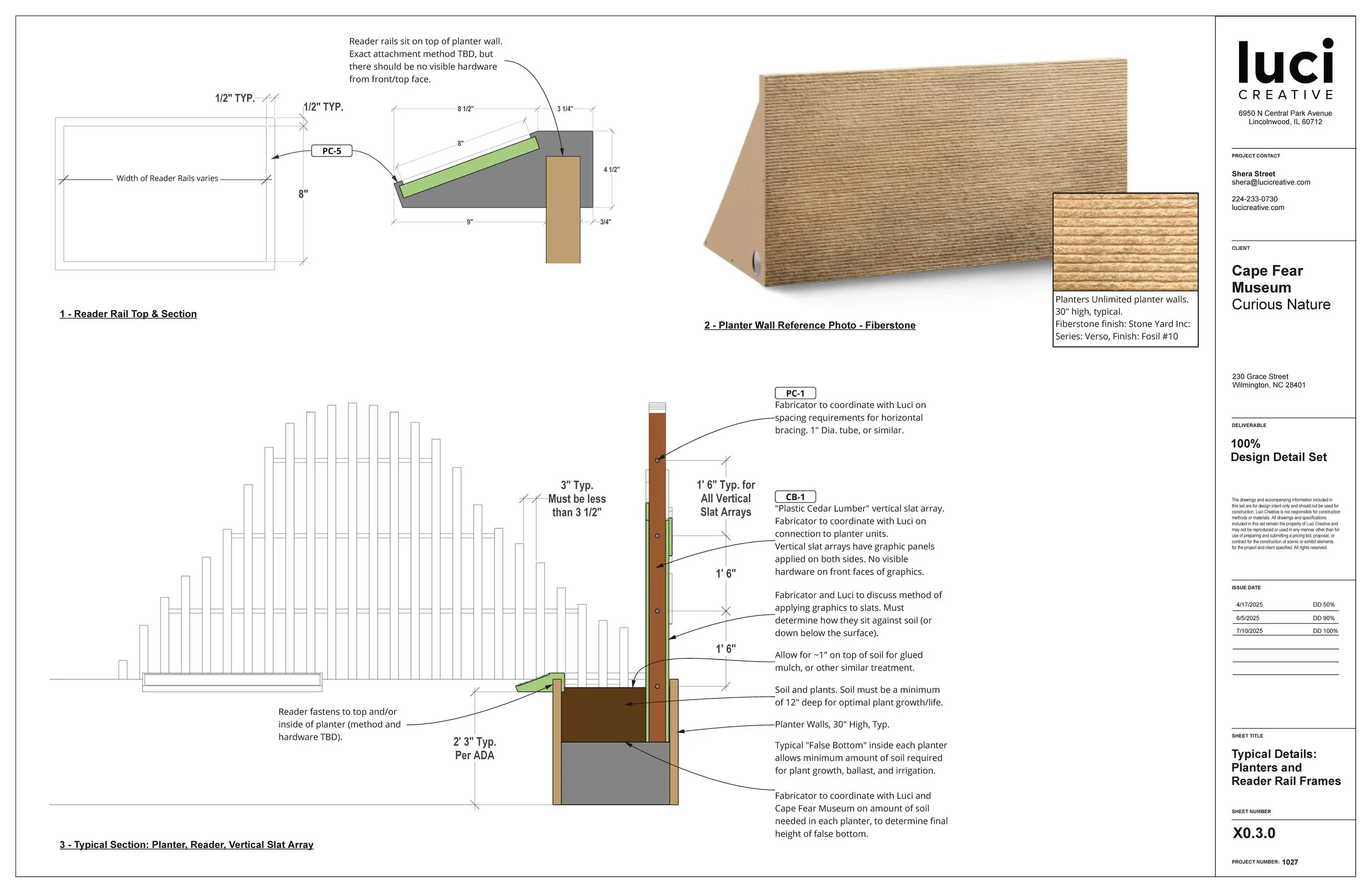
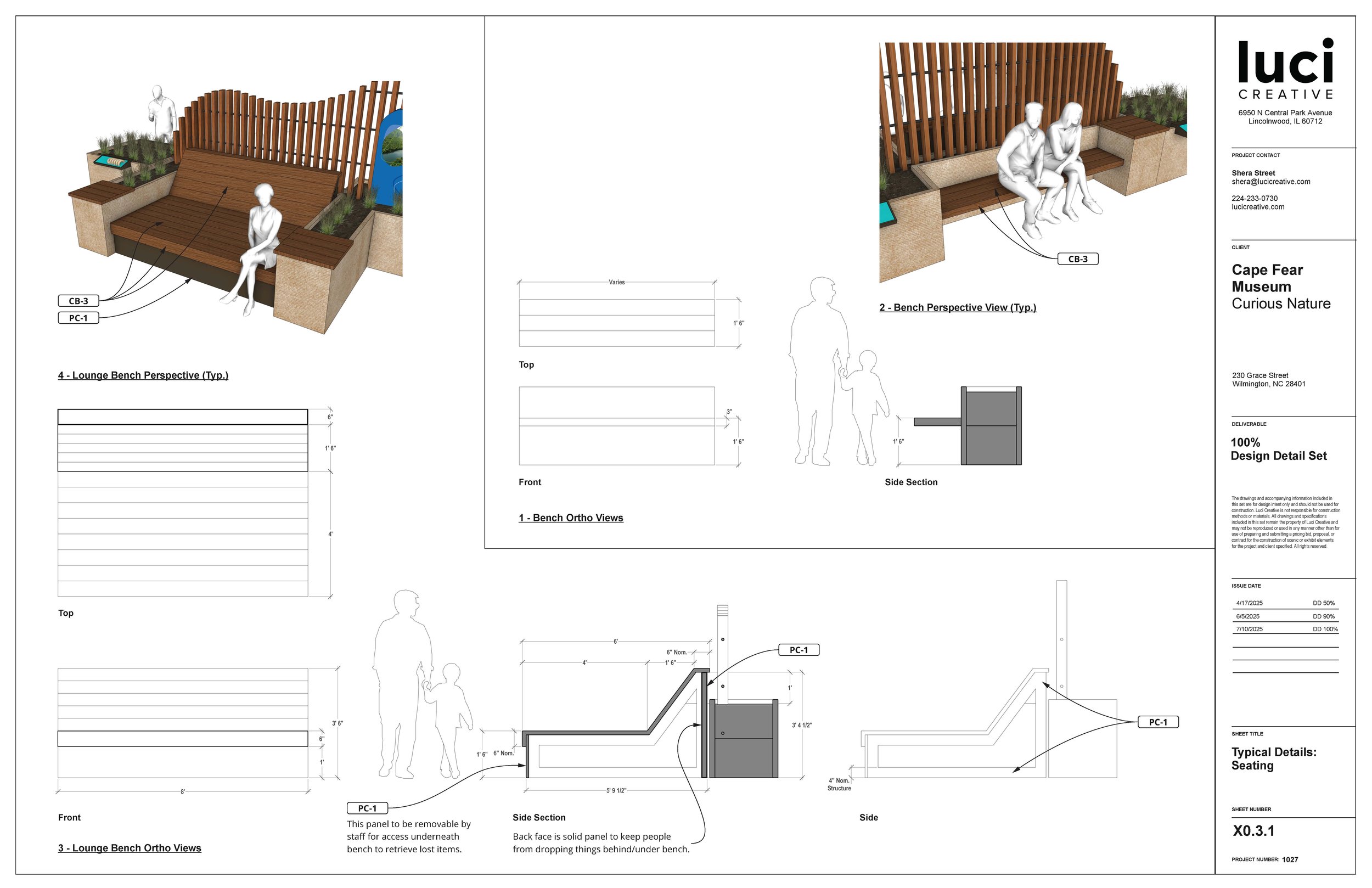
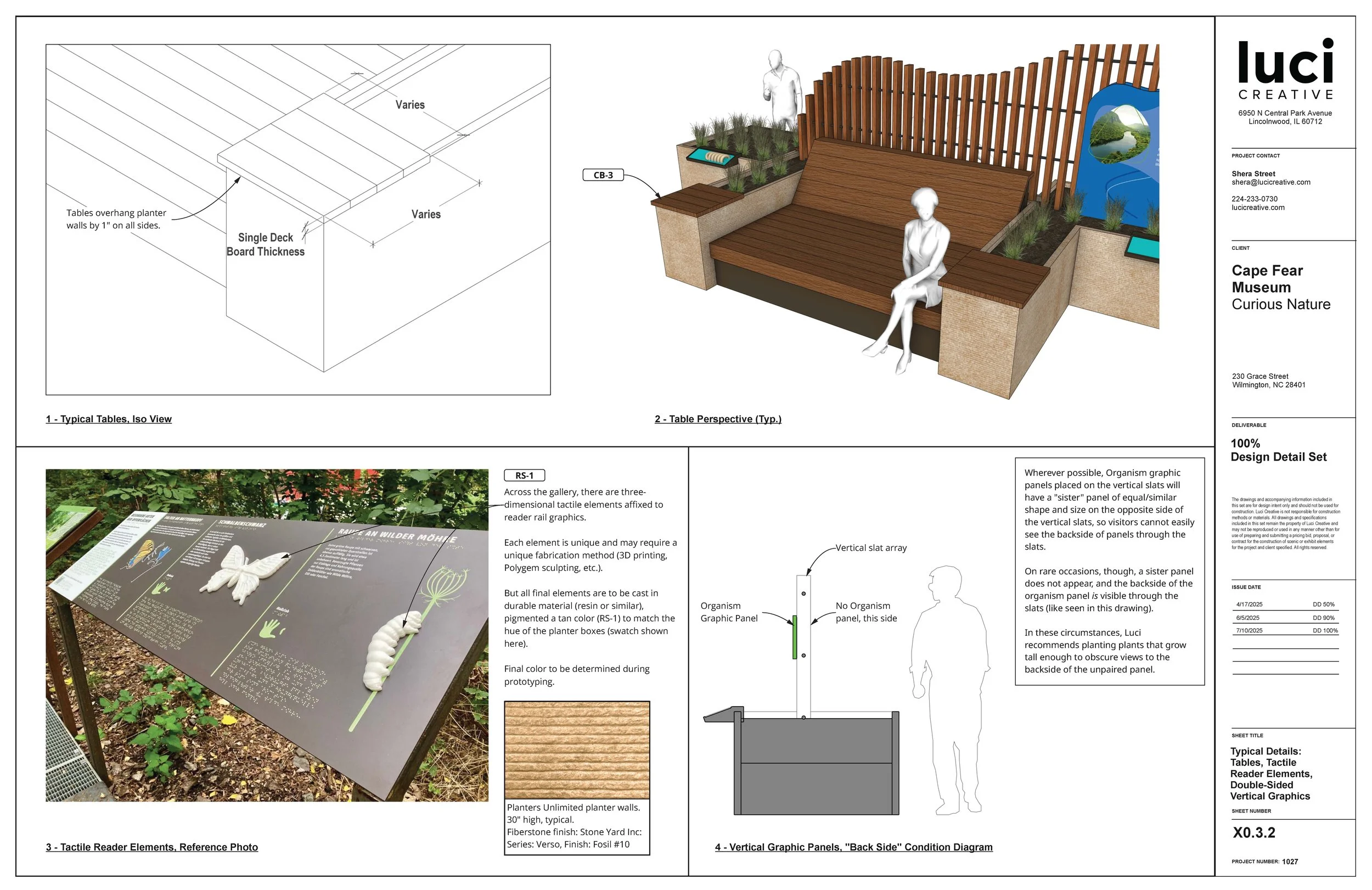
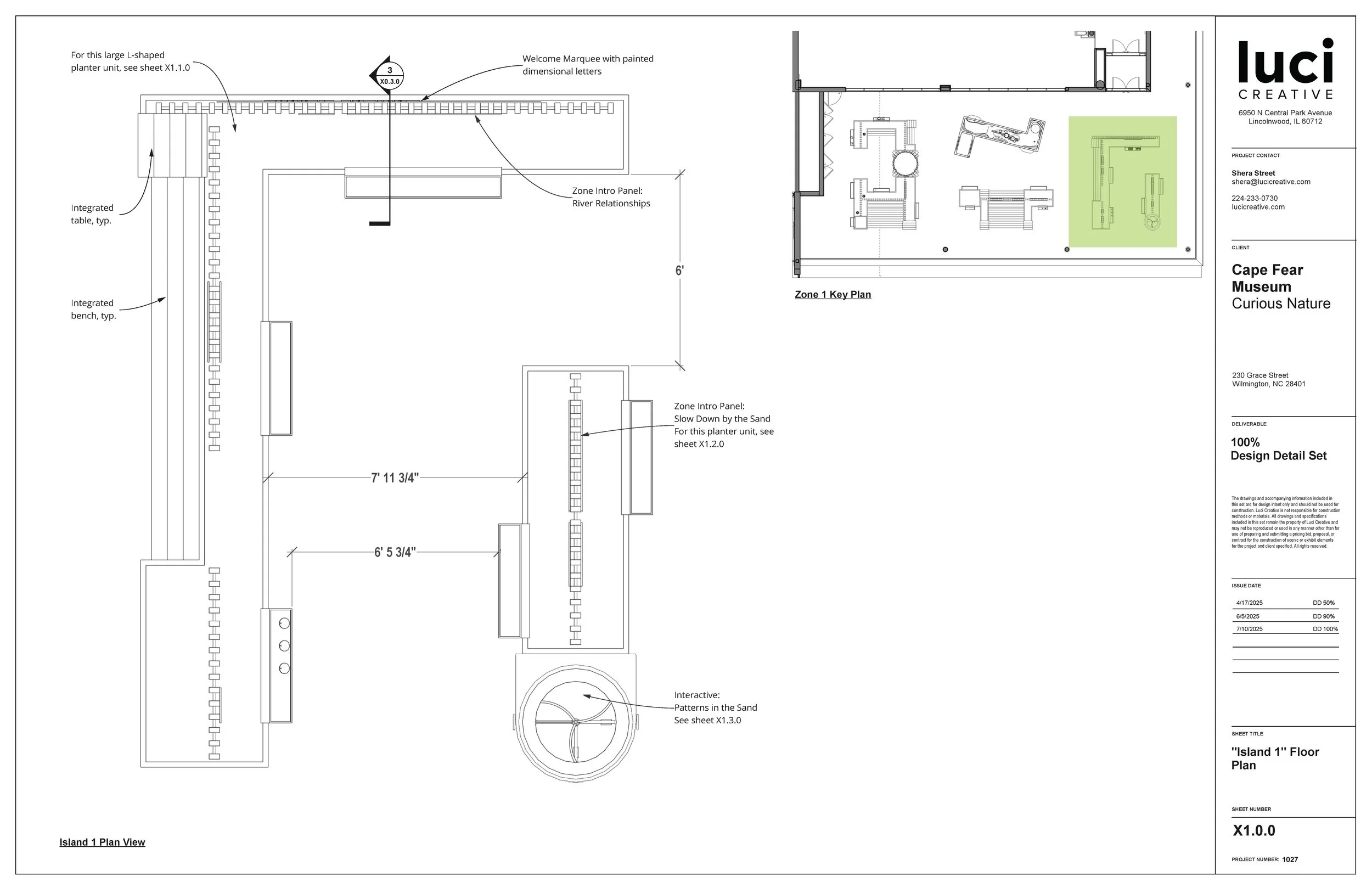
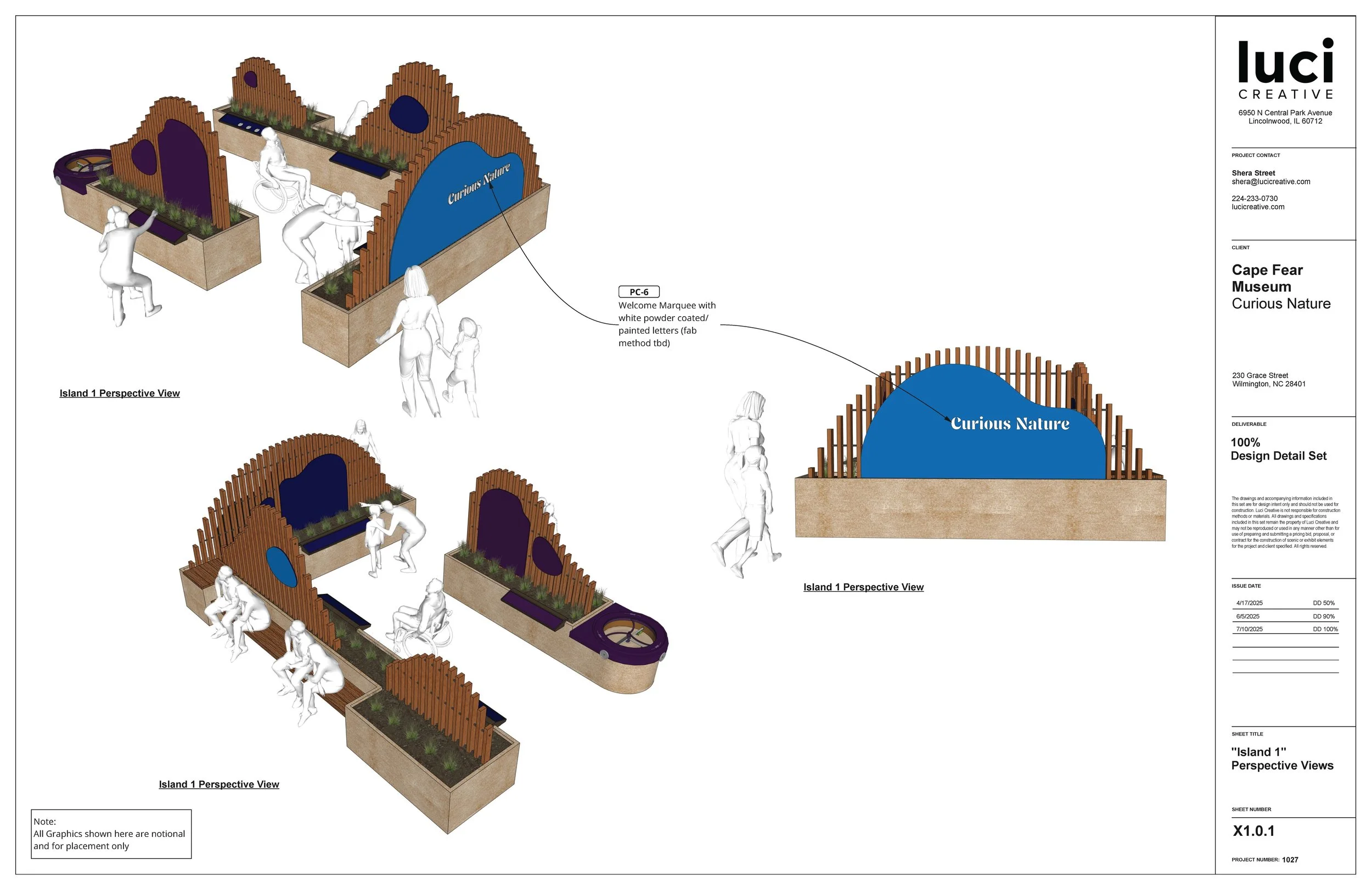
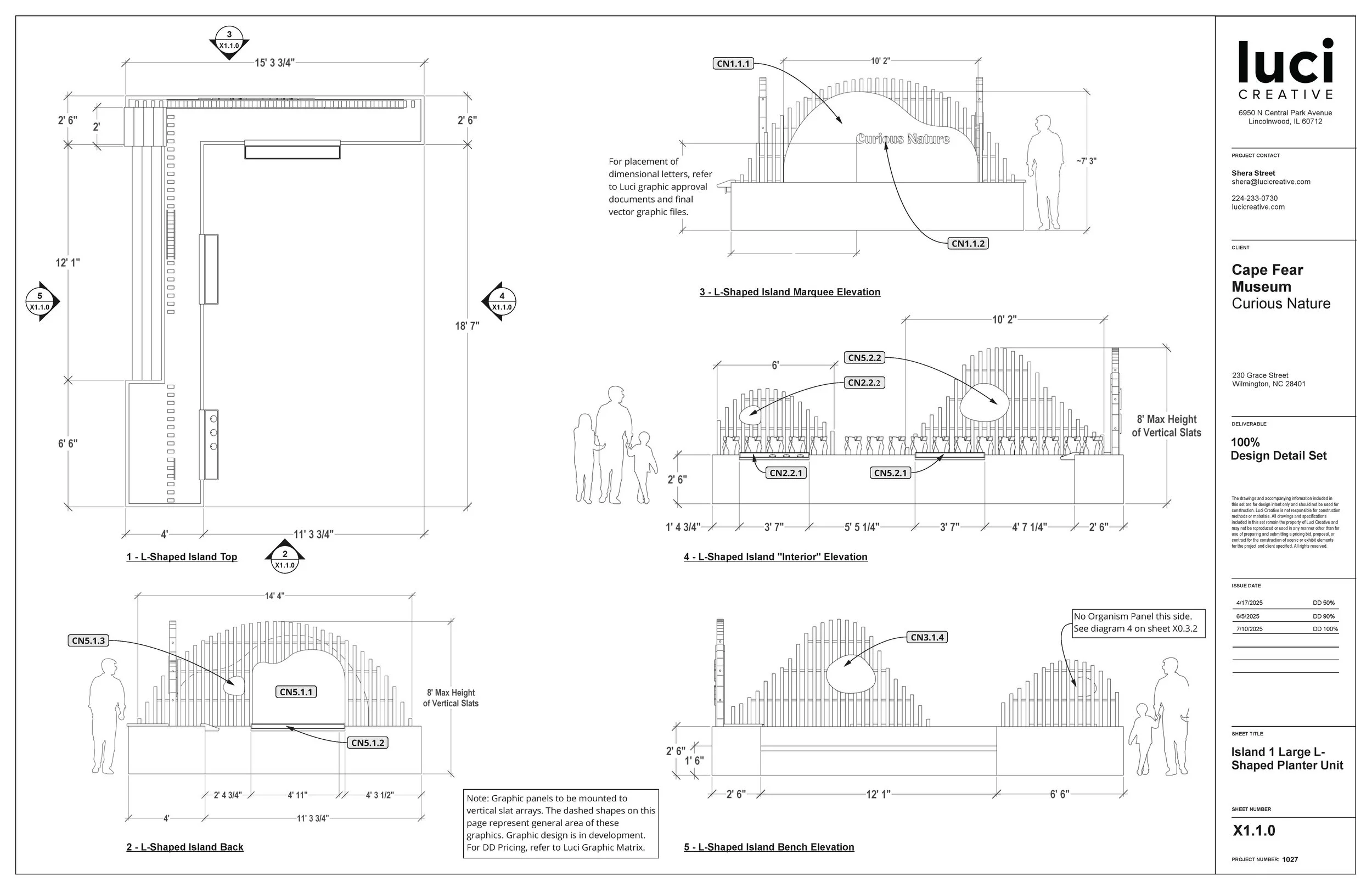
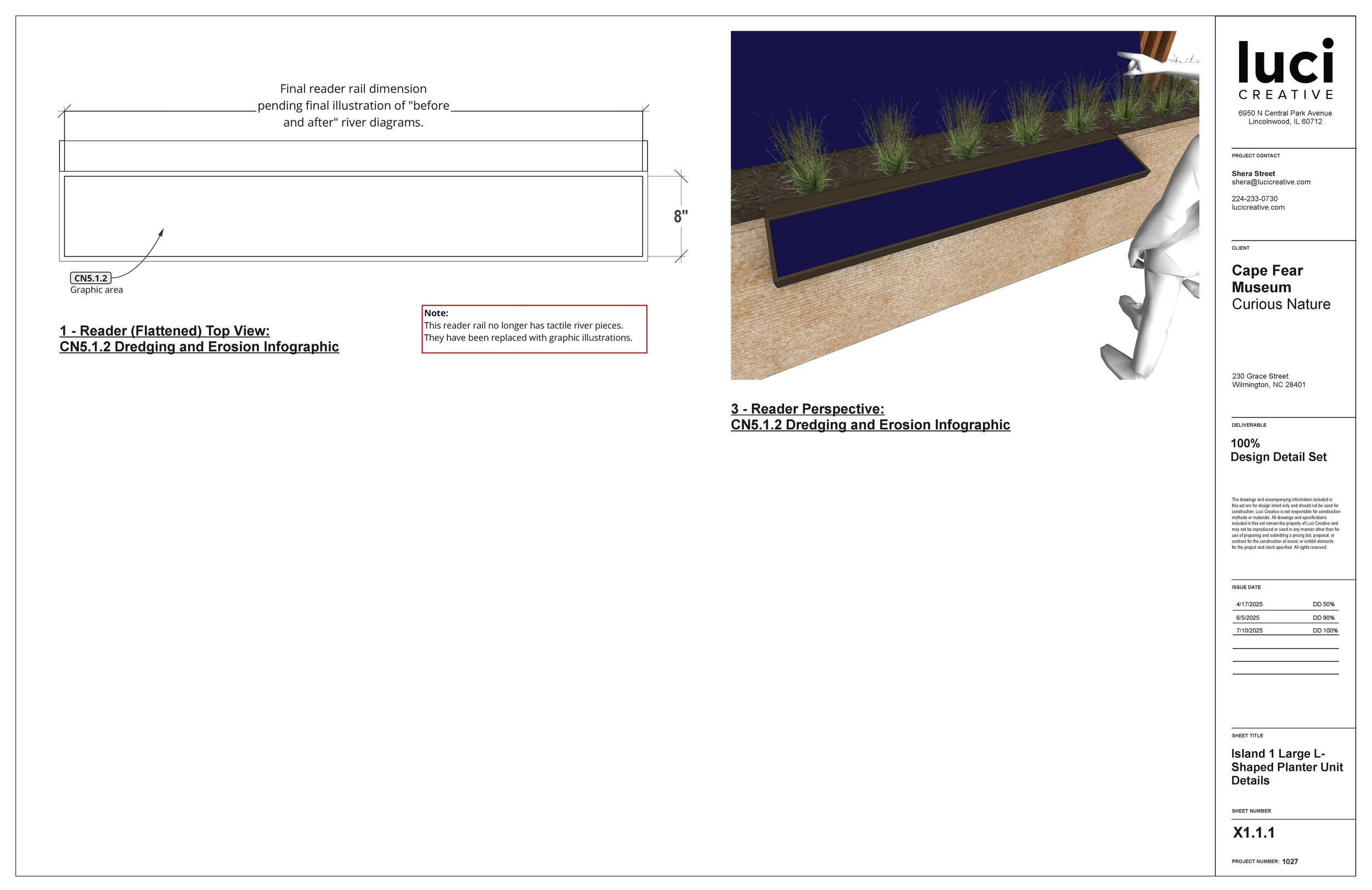
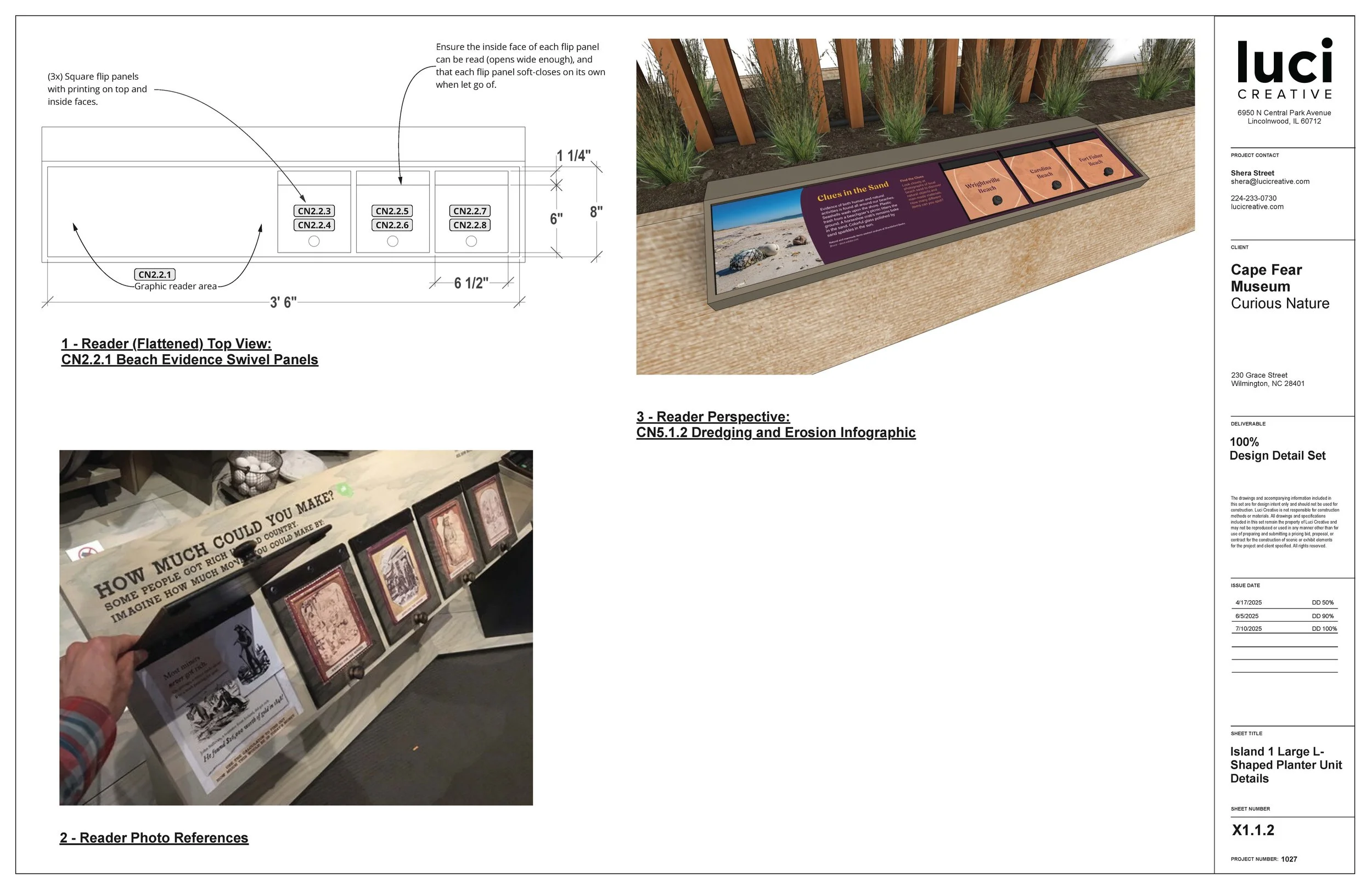
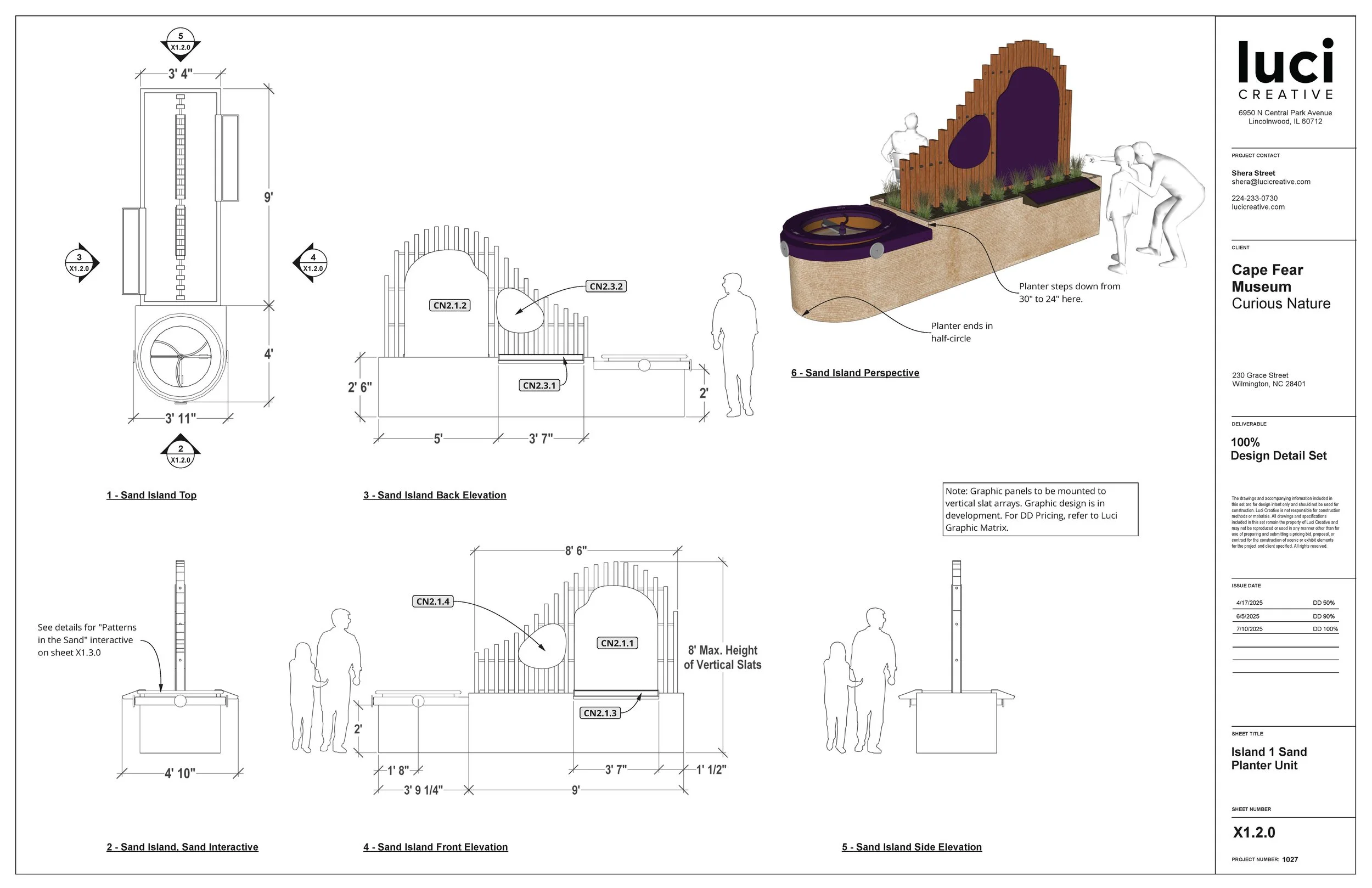
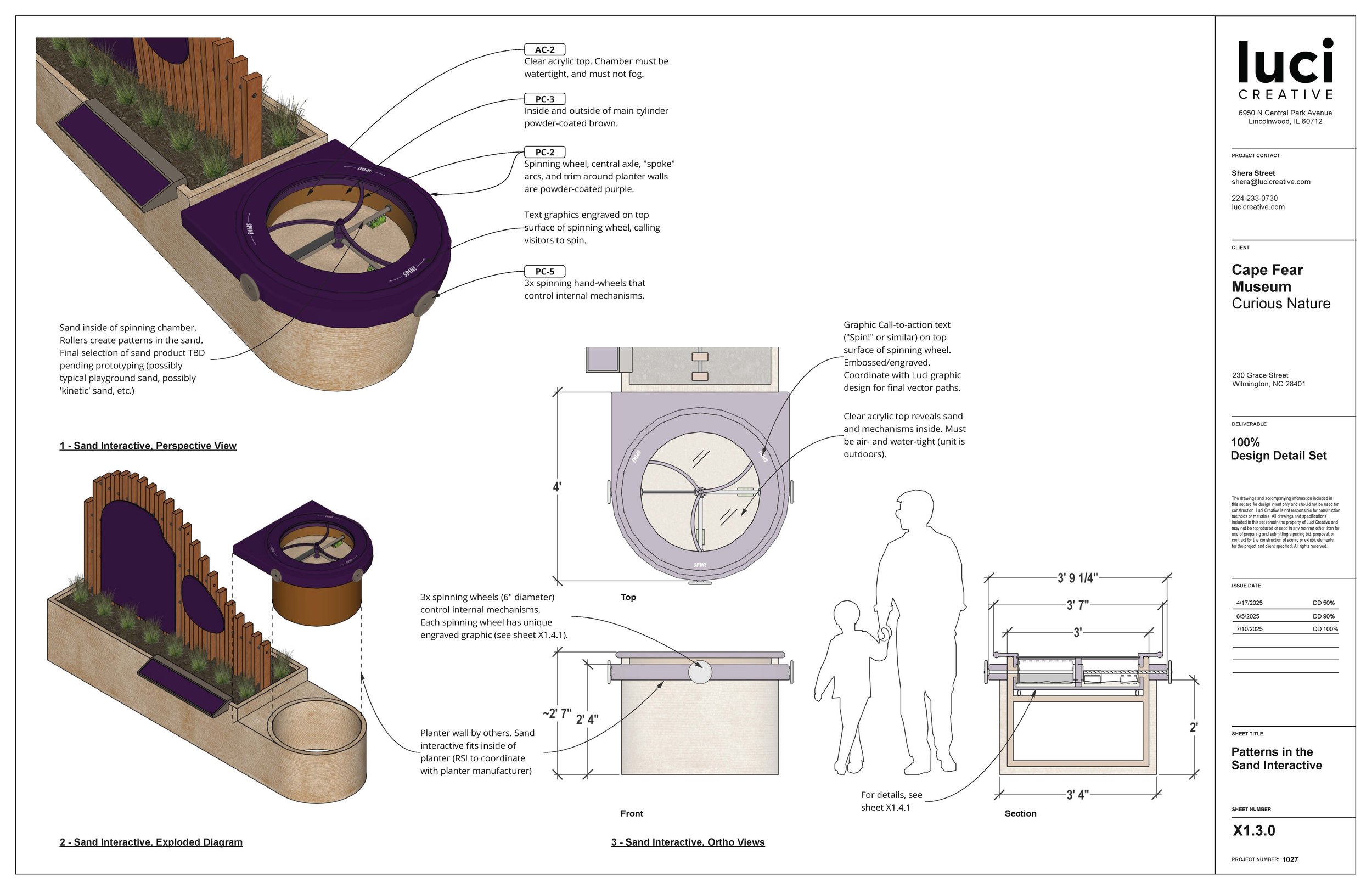
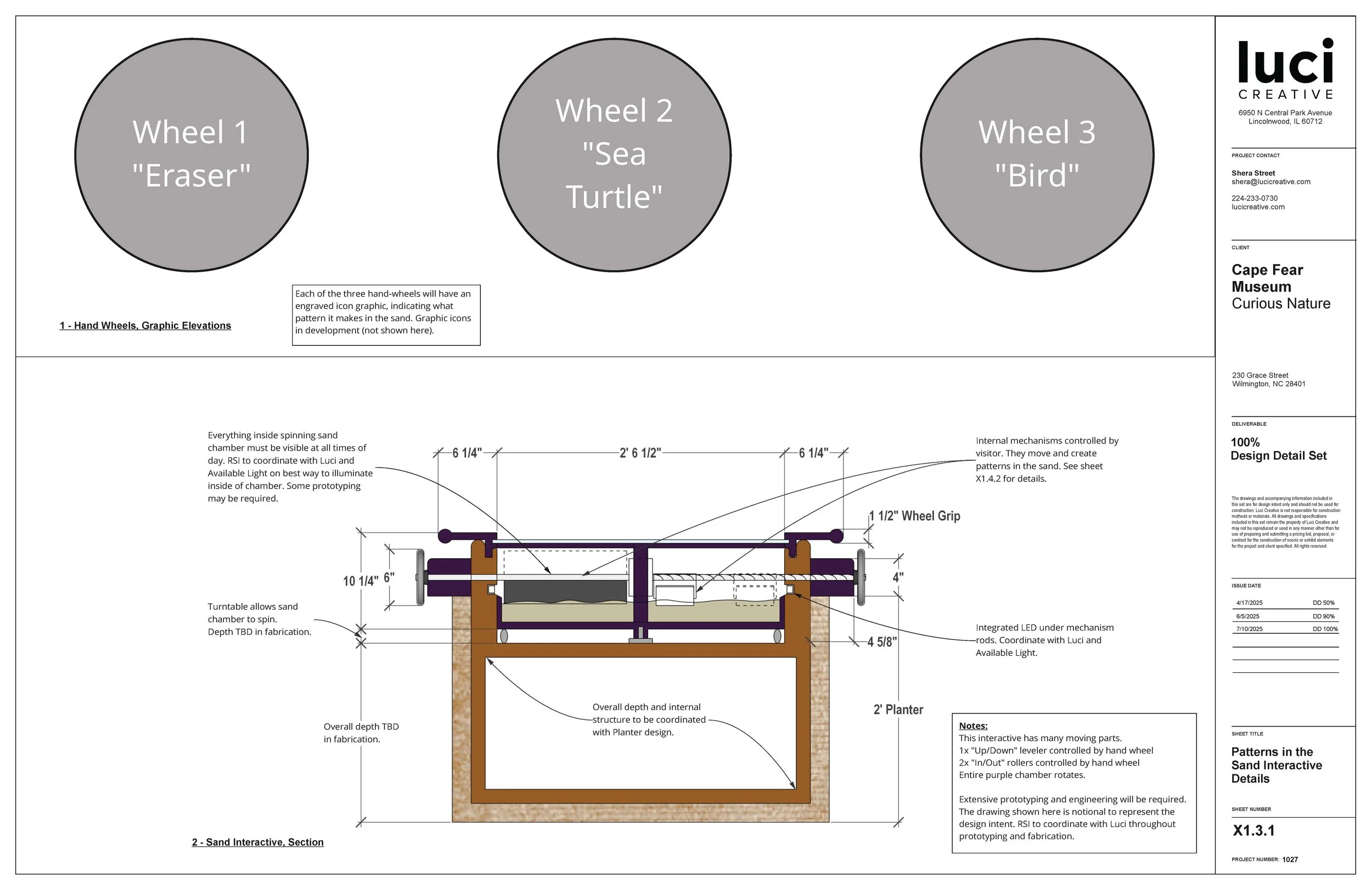
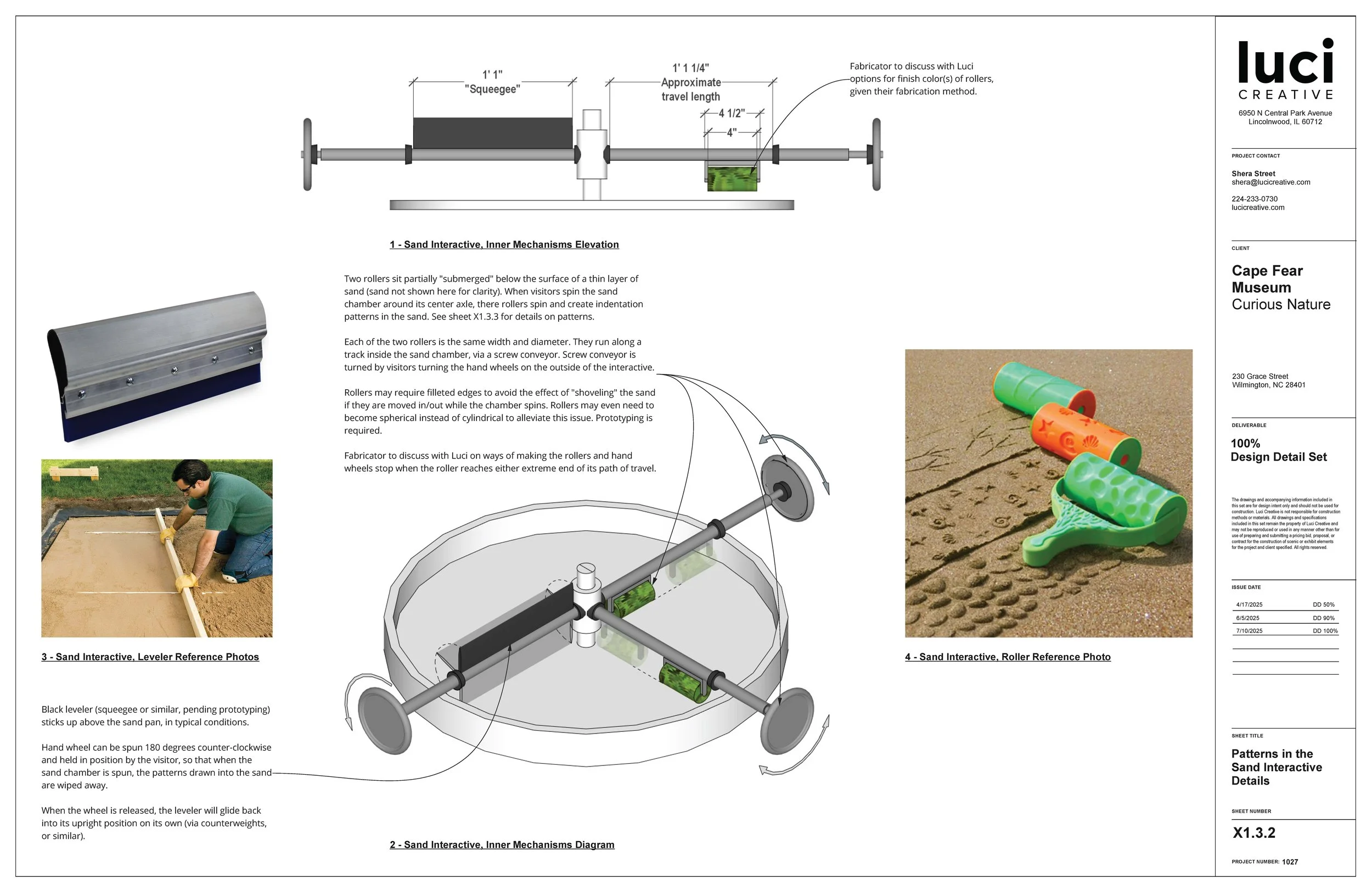
Design Detail Drawing Samples
Back to the Cape Fear Museum
Port City Play
Curious Nature